In his Preface to Shakespeare, Dr. Samuel Johnson, so admired by Jane Austen, asserted that “the mind can only repose on the stability of truth,” and that lasting literary appeal depends upon “just representations of general nature” (Johnson 426). Johnson’s characterization of Shakespeare as his exemplar of this truth—the one who most faithfully “holds up to his readers a faithful mirrour of manners and of life” (426)—is beautifully apt for Jane Austen. His claims that authentic characters “are the genuine progeny of common humanity, such as the world will always supply, and observation will always find,” and that they “act and speak by the influence of those general passions and principles by which all minds are agitated, and the whole system of life is continued in motion,” capture the essence of her enduring appeal (427).
The mirror and the mind
The biographer’s task, however, presents distinct methodological challenges that differ fundamentally from the novelist’s project. If the novelist is charged with reflecting general nature through fictional representation, what constitutes the biographer’s responsibility? The conventional approach has long sought direct correspondence between life and work, attempting to provide unmediated “truth” of the author behind the novels—a face-to-glass, one-to-one reflection that assumes transparency between biographical fact and literary creation.1
This methodology characterized many nineteenth-century biographical projects, undertaken predominantly by male practitioners who believed that biography should uphold moral character, suppress problematic elements, and ensure harmony between life and literary output. These biographers approached their subjects with the conviction that the purpose of biography was didactic: to present exemplary lives that matched the moral tone of the literary works. Jane Austen became a particular victim of this approach, transformed into the quiet aunt who wrote in secret, never requiring departure from domestic spaces, her genius contained within socially acceptable boundaries. The Victorian construction of Austen as the genteel spinster still lingers like the scent of lavender in an empty drawer.
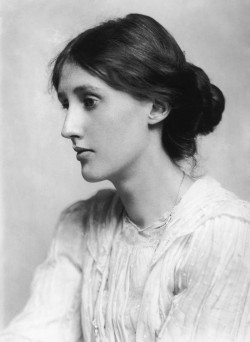
Virginia Woolf, by George Charles Beresford (1902).
Contemporary biographical theory recognizes the limitations of such approaches, yet knowing better does not necessarily make the methodological challenges less complex. Virginia Woolf’s revolutionary intervention in biographical theory provides essential guidance for contemporary practitioners grappling with these fundamental questions. In notebook entries she composed while preparing her two seminal essays on life writing—“The New Biography” (1927) and “The Art of Biography” (1939)—Woolf articulated the fundamental challenge that haunts all biographical endeavor: “The biographer cannot extract the atom. He gives us the husk. Therefore as things are, the best method would be to separate the two kinds of truth. Let the biographer print fully, completely, accurately, the known facts without comment; Then let him write the life as fiction” (qtd. in Lee 10).
This quietly revolutionary statement acknowledges the inherent limitations of biographical method while suggesting alternative approaches that transcend traditional documentary boundaries. The biographer must recognize that mirrors provide surface reflection, not access to essential soul or consciousness. The documented facts—letters, contemporary accounts, financial records, family reminiscences—constitute what Woolf terms “the husk” of biographical truth, the external shell that contains but cannot fully reveal the living essence of individual experience.
Yet Woolf offers hope through her second, more generous insight for biographical practitioners who do not wish to venture into purely fictional territory: that biographical art, if it is to flourish and develop beyond its current limitations, “will enlarge its scope by hanging up looking-glasses at odd corners” (Woolf 226). This methodological suggestion constitutes not merely practical advice but a systematic approach to biographical investigation—one particularly suited to Austen studies, given the relative paucity of direct documentary evidence about her inner life and creative processes.
The “looking-glasses at odd corners” methodology acknowledges that truth emerges not from direct frontal investigation but from oblique approaches, peripheral vision, and indirect illumination. If the central mirror—the direct biographical evidence—provides only surface reflection, then perhaps the angled mirrors placed in unexpected positions reveal aspects of character and experience that escape conventional observation. This approach requires the biographer to examine marginal figures, overlooked objects, cultural contexts, and social connections that might initially appear tangential to the primary subject but that upon closer investigation provide essential illumination.
Theatrical reflections: Performance and literary technique
The theatre provided me with my first significant “looking-glass” for understanding Austen’s artistic development and technical achievement. While every serious Austen biographer has acknowledged her engagement with dramatic performance—family theatricals, dramatic sketches in the juvenilia, the transformation of her favorite novel Sir Charles Grandison into theatrical form—my first book, Jane Austen and the Theatre, argued that critical analysis had often underestimated the significance of this engagement or misinterpreted its implications for understanding her literary technique.
Investigation of Austen’s theatrical connections reveals two crucial arguments that reshape understanding of her artistic development. First, critical interpretation fundamentally erred in supposing that the Lovers’ Vows episode in Mansfield Park constitutes a general critique of theatre itself rather than a focused critique of the Bertrams and the Crawfords—their moral failures, their social presumptions, and their inability to understand appropriate boundaries between public performance and private behavior. Second, scholarship significantly underestimated the extent to which Austen was theatrical not merely in personal interest and family entertainment but in fundamental literary technique and artistic approach.
The evidence for Austen’s theatrical technique pervades her mature fiction. She wrote as a dramatist, employing the structural principles and technical methods of dramatic composition. The irony, dialogue, miscommunication, and comic timing that characterize her prose constitute the essential tools of a playwright rather than conventional novelistic technique. Her novels are structured around entrances and exits, overheard confessions, scenes of public embarrassment, and the fundamental theatrical principle of delay—the strategic withholding of crucial information or decisive action to maintain dramatic tension and develop character through response to sustained pressure.
Numerous scenes in Emma and Pride and Prejudice have been performed on stage or screen with minimal revision, their dramatic structure already complete and their dialogue perfectly calibrated for performance. The extraordinary moment when Elizabeth reads Darcy’s letter—the novel’s pivotal scene and emotional climax—demonstrates how Austen maintains the entire narrative within consciousness, while revealing every emotional fluctuation through internal monologue that functions as dramatic soliloquy. This technique anticipates Chekhov’s dramatic innovations by nearly a century, achieving similar effects through different formal means.
The juvenilia, abundant with parody and dramatic experimentation, reveal a young writer who read plays extensively, observed theatrical performance with critical attention, transcribed dramatic texts for study and entertainment, and instinctively comprehended how voice and gesture create character beyond mere description or exposition. These early works demonstrate sophisticated understanding of dramatic irony, comic timing, and the technical challenges of revealing character through dialogue and action rather than authorial commentary.
Austen’s engagement with Shakespeare was intimate rather than reverential, characterized by practical understanding of dramatic technique rather than scholarly appreciation. Her references to Shakespeare throughout her correspondence and fiction demonstrate familiarity with performance tradition and theatrical interpretation, not merely textual study. If Johnson termed Shakespeare “the poet of nature” who held up the mirror to life, then Austen must be designated the novelist of nature, who held up a slightly angled, often sharply comic glass to domestic and romantic experience, revealing social pretensions and emotional self-deceptions through dramatic exposure.
Hamlet’s instruction to “hold, as ’twere, the mirror up to nature” (Hamlet 3.2) provides additional interpretive framework for understanding Austen’s biographical methodology as well as her literary technique. That mirror rests in an actor’s hand, held by someone assuming a role and performing for an audience. It reflects reality while simultaneously performing interpretation of that reality. The mirror does not provide unmediated access to truth but rather structured, artistic representation designed to illuminate aspects of human experience.
Material culture and emotional texture
If theatrical analysis constitutes one significant approach to biography, material culture provides another essential perspective that can illuminate emotional textures often absent from conventional chronological narrative. The systematic investigation of objects—lace cards, topaz crosses, Indian shawls, correspondence, bathing machines—reveals dimensions of experience that escape traditional biographical methods while maintaining rigorous connection to documented historical evidence. That was my method in The Real Jane Austen: A Life in Small Things.
This approach reflects Woolf’s fundamental insight that psychological truth emerges through reflection and refraction, rather than from direct observation or documentary compilation. The soul does not present itself for biographical recording through conventional sources but is glimpsed in fragments, caught peripherally, like movement observed in a mirror before someone turns to face the observer directly. Objects carry emotional weight and symbolic significance that transcend their immediate practical function, particularly in an era when material possessions were fewer, more carefully chosen, and more intimately connected to personal identity and social position.
The topaz cross exemplifies this approach and demonstrates how careful attention to material objects can illuminate both biographical and literary dimensions of Austen’s experience. This gift from Jane’s brother Charles—small, beautiful, exotic, purchased with naval prize money when he captured an enemy ship—carried significance far beyond sentimental value. The cross represents Christianity, certainly, but also suffering, sacrifice, and value that transcends monetary consideration. It embodies the connection between domestic life and imperial adventure, between family affection and naval service, between personal sentiment and global commerce.
At the emotional center of Mansfield Park, Fanny Price’s own cross—also a gift from a sailor brother—becomes a touchstone of constancy amid shifting affections and moral compromises. The parallel between Jane’s biographical experience and Fanny’s fictional situation suggests how personal objects became incorporated into literary creation, carrying their emotional associations into new artistic contexts. Objects in Austen’s fiction are never merely decorative or functional; they signify moral and emotional states, represent relationships and values, and provide concrete anchors for abstract psychological conditions.
The bathing machine provides another revealing example of how material culture illuminates biographical understanding while connecting personal experience to literary creation. This awkward contraption—essentially a wheeled hut that allowed modest entry into the ocean—becomes a vehicle of female freedom and physical restoration in ways that transcend its immediate practical function. Austen’s passionate engagement with sea-bathing, documented in her correspondence and reflected in family accounts, reveals her belief in the healing properties of cold ocean water and her commitment to physical as well as intellectual vitality.
This personal practice fed directly into her creative imagination and physical well-being. Persuasion abounds with sea air and second chances, salt breezes and reawakened longings, suggesting how personal experience of seaside restoration influenced literary representation of renewal and recovery. The novel’s pervasive atmosphere of maritime freshness and its thematic concern with second chances and restored health reflect Austen’s own experience of seaside revival and her conviction that physical restoration and emotional renewal are intimately connected.
Moreover, a seaside holiday provided the context for one of the most tantalizing episodes of Austen’s biographical record—her brief but intense romance with an unnamed young man in Sidmouth or a similar coastal location. Documentary evidence remains frustratingly limited: he was “unusually gifted with all that was agreeable” (Family Record 127); there was discussion of future meetings; Cassandra considered him the only man worthy of her sister—and then, suddenly, he died. This vanished figure has haunted Austen biography, representing the path not taken, the alternative life that might have developed had circumstances been different.
The connection between seaside experience, romantic possibility, and literary creation suggests how personal encounters become transformed into artistic material through complex processes of memory, imagination, and creative revision. The bathing machine thus becomes not merely a biographical detail but a symbol of transformation—the vehicle that carried Austen from one state of being to another, both literally and metaphorically.
A seemingly unpromising object provides an opportunity for additional biographical insight: the dirty shaving rag mentioned in Austen’s correspondence with her niece Fanny Knight. This reference appears in a letter responding to Fanny’s confession that she had visited a suitor’s bedchamber to stimulate her feelings for him—a daring and rather comical experiment in emotional manipulation. Austen responds with characteristic wit: “Your trying to excite your own feelings by a visit to his room amused me excessively.—The dirty Shaving Rag was exquisite!—Such a circumstance ought to be in print. Much too good to be lost” (18–20 November 1814).
The significance of this passage extends beyond its immediate comic content. The image was indeed lost for a long time! This line was excised from the original nineteenth-century publication of the letters by Lord Brabourne, Jane Austen’s prudish great-nephew, who considered it too indelicate for public consumption. A young woman inspecting a young man’s private chambers? A dirty rag mentioned? Such details violated Victorian sensibilities about appropriate feminine behavior and proper biographical representation, particularly given that Fanny Knight was Lord Brabourne’s own mother.
Yet the detail illuminates multiple aspects of Austen’s character and relationships: her wit and timing, her intimate communication with her niece, her capacity to discover comedy in mundane circumstances and, most significantly, her delight in authentic human experience over idealized romantic convention. The passage situates readers not in the realm of sentimental romance but in the domestic reality of daily life: shaving mirrors and dirty rags constitute the very stuff of life that Austen found more interesting and revealing than artificial literary conventions.
The rag, lying beside a shaving mirror, connects material object to self-reflection and vanity—themes that pervade Austen’s fiction and suggest her consistent interest in the gap between self-perception and reality, between public presentation and private truth. This seemingly trivial detail thus opens into larger questions about authenticity, performance, and the revelation of character through response to mundane circumstances rather than dramatic crises.
Mirrors in the novels: Vanity, modesty, and self-knowledge
Physical mirrors appear with surprising infrequency in Austen’s first five novels, yet their rarity makes their concentrated appearance in Persuasion more significant for understanding her development as artist and moral observer. The mirrors function not as mere furniture but as symbolic indicators of character, moral state, and relationship to self-knowledge. Their distribution and use reveal Austen’s sophisticated understanding of vanity, modesty, and the complex relationship between external appearance and internal worth.
The profusion of mirrors in Sir Walter Elliot’s dressing-room at Kellynch Hall provides the most extensive treatment of reflective surfaces in Austen’s fiction and serves multiple symbolic and satirical functions: “Vanity was the beginning and the end of Sir Walter Elliot’s character; vanity of person and of situation. . . . He considered the blessing of beauty as inferior only to the blessing of a baronetcy” (4). This character represents the extreme of self-regard, the complete absorption in external appearance that precludes genuine self-knowledge or concern for others.
When Admiral Croft relocates to Kellynch Hall and observes the mirror collection, his bewildered response provides Austen with the opportunity for moral exposition that reveals the contrast between authentic and artificial values:
I must do ourselves the justice to say, that the few alterations we have made have been all very much for the better. My wife should have the credit of them, however. I have done very little besides sending away some of the large looking-glasses from my dressing-room, which was your father’s. A very good man, and very much the gentleman I am sure—but I should think, Miss Elliot” (looking with serious reflection) “I should think he must be rather a dressy man for his time of life.—Such a number of looking-glasses! oh Lord! there was no getting away from oneself.” (127–28)
The parenthetical observation that Admiral Croft speaks while “looking with serious reflection” constitutes a masterpiece of linguistic precision and thematic development. Austen employs both literal and figurative meanings simultaneously: Croft gazes with his eyes while reflecting mentally, demonstrating the proper relationship between external observation and internal contemplation. The phrase captures the essential difference between mere looking and genuine reflection, between surface observation and moral consideration.
The key to Admiral Croft’s moral superiority lies in his instinctive desire to get away from himself—to demonstrate generosity toward others, to empathize with different perspectives, to observe and serve others rather than focusing on self-regard. This represents the fundamental principle of Austen’s moral system: authentic virtue involves self-forgetting rather than self-promotion, attention to others’ needs rather than personal appearance. The moral lesson embedded in the mirror imagery is unambiguous: the more characters seek themselves in reflective surfaces, the less genuine self-knowledge they possess.
Admiral Croft’s continued explanation reveals additional dimensions of his character and values: “‘So I got Sophy to lend me a hand, and we soon shifted their quarters; and now I am quite snug, with my little shaving glass in one corner, and another great thing that I never go near’” (128). Austen’s characteristic economy and precision operate here to reveal multiple aspects of personality and relationship. Sophy’s assistance in relocating the mirrors demonstrates the intimacy and cooperation of the Crofts’ marriage—surely the finest of the few genuinely happy marriages in Austen’s fiction—while “shifted their quarters” represents one of the naval metaphors in which the Admiral naturally thinks and speaks. His preference for “a little shaving glass” while avoiding “another great thing that I never go near” reflects his practicality and complete absence of vanity. This contrast between Sir Walter’s multiplication of reflective surfaces and Admiral Croft’s preference for minimal, functional mirrors establishes a moral hierarchy that pervades Persuasion and connects to broader themes about social change, merit versus inherited position, and the emergence of new forms of gentility based on service and character rather than birth and appearance.
Henry Crawford’s tribute to Fanny Price provides alternative mirror imagery that demonstrates Austen’s sophisticated use of reflective metaphors for moral and psychological analysis:
Fanny’s beauty of face and figure, Fanny’s graces of manner and goodness of heart were the exhaustless theme. The gentleness, modesty, and sweetness of her character were warmly expatiated on, that sweetness which makes so essential a part of every woman’s worth in the judgment of man, that though he sometimes loves where it is not, he can never believe it absent. . . . What could more delightfully prove that the warmth of her heart was equal to its gentleness?—What could be more encouraging to a man who had her love in view? Then, her understanding was beyond every suspicion, quick and clear; and her manners were the mirror of her own modest and elegant mind. (294)
The crucial phrase—“her manners were the mirror of her own modest and elegant mind”—demonstrates how mirror imagery functions in Austen’s moral system when properly understood and applied. Here the mirror does not provide surface reflection but serves as a transparent medium through which internal character becomes visible through external behavior. Fanny’s external gentleness reveals rather than conceals her internal strength and moral consistency. The mirror metaphor suggests perfect correspondence between inner virtue and outward manifestation, the ideal relationship between character and conduct that represents Austen’s moral standard.
When Henry finally perceives Fanny clearly and accurately, this recognition occurs not through physical reflection in actual mirrors but through mental perception that transcends surface appearance to appreciate moral worth. His sudden recognition of her value represents the kind of insight that Austen’s fiction promotes: the ability to see beyond conventional attractiveness to recognize genuine worth, the capacity to appreciate virtue over mere accomplishment or physical beauty.
Catherine Morland’s experience in Northanger Abbey demonstrates mirrors functioning as reality checkpoints, moments of return from fantasy to authentic self-perception. When she “hastily closed [the mysterious chest] and turned away to the glass” (165) after her gothic imaginings prove unfounded, the mirror provides a pause before she rejoins the real world, a moment of sanity amid self-induced fantasy. The mirror becomes a tool for self-correction, a means of returning to rational perspective after indulgence in romantic speculation.
This pattern—mirrors as instruments of moral measurement rather than mere vanity—pervades Austen’s fiction and suggests her consistent concern with the relationship between self-perception and reality, between public presentation and private truth, between external appearance and internal worth.
Naval representations and cultural transformation: Southey’s Nelson
The marked transformation in Austen’s naval characterizations between Mansfield Park (written 1811–13) and Persuasion (written 1815–16) requires explanation that goes beyond simple artistic development to encompass broader cultural and historical changes that influenced both literary representation and social attitudes. The violent, drunken Lieutenant Price and the morally corrupt Admiral Crawford in the earlier novel bear no resemblance to the exemplary Captains Wentworth, Harville, and Benwick or the genial Admiral Croft in the later work. This transformation reflects not merely changing artistic priorities but shifting cultural perceptions of naval service and national heroism.
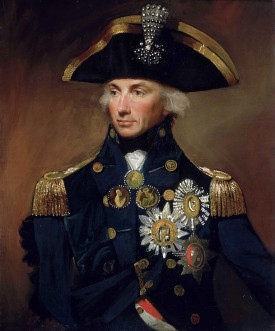
Vice Admiral Horatio, Lord Nelson, by Lemuel Francis Abbott (1799). Courtesy National Maritime Museum. |
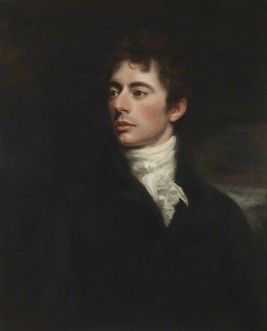
Robert Southey, by John Opie (1806). Courtesy Keswick Museum and Art Gallery. |
Robert Southey’s Life of Nelson, published in 1813 at the height of anti-Napoleonic sentiment, provides crucial contextual understanding for this transformation in Austen’s naval representations. National admiration for the navy really began with the cult of Nelson, beginning from the spectacle and grief of his state funeral, which was the nineteenth-century equivalent of Princess Diana’s. But that takes us back to 1805–06. What changed between 1811 and 1815? The final victories over Napoleon were the larger context, of course: it is crucial to the plot and the imaginary afterlife of Captain and Mrs. Wentworth that the novel is set after Napoleon’s exile to Elba but before his escape and his defeat at Waterloo. More specifically, though, with regard to the cult of Nelson, might a key be found in another odd corner of Austen’s writings? There is a passing reference in her letter to Cassandra, written from Godmersham Park on 11–12 October 1813: “Southey’s Life of Nelson; I am tired of Lives of Nelson, being that I never read any. I will read this however, if Frank is mentioned in it.”
There is no doubting Austen’s familiarity with Southey’s life and work, as recent scholarship has shown (Bander). Writing on 24 January 1817 to her friend Alethea Bigg, who was staying with her brother-in-law Reverend Herbert Hill, Southey’s uncle, she says, apropos of another of his patriotic works,
We have been reading the “Poet’s Pilgrimage to Waterloo”, & generally with much approbation. Nothing will please all the world, you know; but parts of it suit me better than much that he has written before. The opening—the Proem I beleive he calls it—is very beautiful. Poor Man! One cannot but grieve for the loss of the Son so fondly described. Has he at all recovered it? What do Mr and Mrs Hill know of his present state?
Whether or not Southey’s Life of Nelson was one of the works that did not suit her as well as the “Poet’s Pilgrimage” (she might have found the account of Nelson’s long adulterous affair with Lady Hamilton a little indecorous), she could not have failed to be aware of its influence.
Southey’s work functioned not as a dry chronicle of naval engagements but as accessible nationalist myth-making that elevated Horatio Nelson from celebrated admiral to secular saint. His explanatory note reveals the conscious project of cultural transformation:
Many Lives of Nelson have been written; one is yet wanting, clear and concise enough to become a manual for the young sailor, which he may carry about with him till he has treasured up the example in his memory and in his heart. In attempting such a work I shall write the eulogy of our great National Hero; for the best eulogy of NELSON is the faithful history of his actions; the best history, that which shall relate them most perspicuously. (Author’s Preface)
Southey did not invent Nelson’s fame—the hero of Trafalgar was already a household name, preserved in ballads and shipboard tales—but he refined and polished that reputation with literary skill and moral clarity. Unlike earlier, more formal biographies that focused primarily on naval strategy and political consequences, Southey’s version emphasized character, emotion, and private life alongside public victories. He established or consolidated immortal phrases, such as “Kiss me, Hardy” and “England expects that every man will do his duty,” drawing upon existing accounts but investing them with new pathos and moral resonance that transformed historical incidents into mythic moments.
The appointment to Poet Laureate six months after the book’s publication, partly as recognition of its patriotic contribution, demonstrates the cultural significance of Southey’s achievement and its role in shaping national consciousness about naval service and military heroism. Crucially, Southey presented Nelson not as an aloof aristocrat commanding through inherited privilege, but as an exemplar of energetic, self-made professionalism—a man of feeling as well as action whose authority derived from demonstrated competence rather than social position. This reimagining appealed directly to rising middle-class values and expectations, presenting naval service as a meritocratic institution where talent and dedication could achieve recognition regardless of birth or fortune.
This cultural transformation, mediated through Southey’s influential biography, appears to have influenced Austen’s naval portrayals significantly. Mansfield Park, drafted in 1811–13, chiefly before Southey’s biography appeared, presents Admiral Crawford as a morally suspect figure—glimpsed only peripherally but associated with mistresses, moral corruption, and the abuse of authority that characterized traditional aristocratic privilege. The novel’s naval characters operate within older frameworks of social hierarchy and moral accountability.
Persuasion, written post-Southey, offers a completely different vision of naval society embodied in Admiral Croft, Captain Wentworth, and their associates. These characters represent genial, warm-hearted gentlemen of the new meritocracy, exemplars of sense and kindness whose authority derives from demonstrated competence and moral character rather than inherited position. They embody the values that Southey attributed to Nelson: patriotism, modesty, duty, professional competence, and capacity for both practical action and romantic feeling.
Both Southey and Austen had brothers who became midshipmen at age twelve and rose through naval ranks through merit rather than influence, providing both authors with intimate knowledge of naval life from family experience. Both understood the moral seriousness as well as the comic possibilities of naval society, the challenges of shipboard life, and the character formation that resulted from professional service under demanding conditions.
Southey’s version of Nelson—patriotic yet modest, dutiful yet capable of grand romantic feeling, professional yet accessible—along with Austen’s beloved brothers Francis and Charles helped shape the vision of naval virtue that suffuses Persuasion and makes it unique among Austen’s novels for its unqualified admiration of professional military service. The novel presents naval society as an ideal community where merit is recognized, where domestic happiness is possible, and where traditional social hierarchies give way to more democratic arrangements based on character and achievement.
Glass sea, shadowed depths: Mirrors, metaphors, and biographical imagination
Sanditon contains no literal mirrors but employs significant metaphorical reflection through Sir Edward Denham’s overwrought description of the sea and seaside experience. In the middle of one of his characteristically florid speeches to Charlotte Heywood, he praises the ocean in typically excessive fashion:
He began, in a tone of great Taste & Feeling, to talk of the Sea & the Sea shore—& ran with Energy through all the usual Phrases employed in praise of their Sublimity, & descriptive of the undescribable Emotions they excite in the Mind of Sensibility.—The terrific Grandeur of the Ocean in a Storm, its glassy surface in a calm, its’ Gulls & its Samphire, & the deep fathoms of its’ Abysses, its’ quick vicissitudes, its’ direful Deceptions, its’ Mariners tempting it in Sunshine & overwhelmed by the sudden Tempest, All were eagerly & fluently touched;—rather commonplace perhaps—but doing very well from the Lips of a handsome Sir Edward,—and she cd not but think him a Man of Feeling—till he began to stagger her by the number of his Quotations, & the bewilderment of some of his sentences. (396)
This is Sir Edward in full performance mode. He wants to impress Charlotte with his sensibility—his poetry, his taste, his manly trembling before the sublime. But he is a man of slippery surface, both as smooth and as shallow as glass. He can’t remember his quotations, and when he does, he misattributes them. Austen, always the satirist, is playing a double game. Sir Edward’s glassy sea is both a cliché and a clue.
The sea is not just a backdrop in Sanditon. It is a character, a force, a metaphor. And here again, we might recall that the surface of a mirror reflects—but hides its depths. What lies beneath that calm surface? In the seaside resort of Sanditon, it is change. Commerce. Illness. Racial difference (Miss Lambe). Jane Austen’s final novel opens up the world in ways her earlier novels have only hinted at.
The incomplete nature of Sanditon means that we cannot determine with certainty how Austen intended to develop Miss Lambe’s character or what role racial difference would have played in the completed novel. Yet her presence signals Austen’s growing awareness of Britain’s imperial entanglements and the increasingly complex social configurations that resulted from colonial wealth and global commerce. The seaside resort itself—with its speculation, its health-seeking visitors, and its commercial ambitions—represents England’s expanding engagement with the wider world.
This is where biographical methodology encounters its ultimate challenge and its greatest opportunity. The documented facts provide only fragments: Austen’s naval brothers, her seaside experiences, her engagement with contemporary literature and politics, her declining health and awareness of mortality. How does the biographer responsibly approach the gaps, the silences, the paths not taken or only partially explored? Here Virginia Woolf’s second door—the door to responsible fictional imagination—becomes relevant for biographical practice. In Six Weeks by the Sea, my biographical novel about Austen’s holiday romance, I attempted to engage with these challenges through what might be termed “informed speculation”—fiction grounded in careful research but willing to explore possibilities that documented evidence suggests but cannot prove.
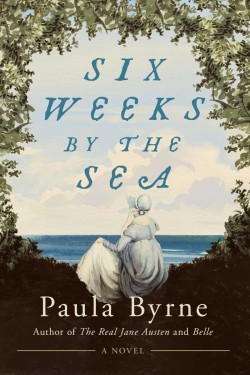 I imagined Jane falling in love not with a soldier or a naval captain (the conventional romantic scenarios) but with a literary lawyer, someone like Samuel Rose, the friend of William Cowper and William Blake—a man who might have quoted sea poems with more self-awareness than Sir Edward Denham, who might have seen in the sea not just a decorative glass surface but a symbol of future possibility and moral complexity. Significantly, Rose was an avid abolitionist, which provided an opportunity to weave contemporary concerns about slavery and racial justice into Austen’s biographical narrative through plausible historical connection.
This fictional approach allowed exploration of how Austen might have engaged with the pressing moral questions of her era—questions that surface in Sanditon through Miss Lambe’s presence, but remain undeveloped due to the novel’s incomplete state. It permitted investigation of how personal experience might have informed literary creation, how romantic possibility might have influenced artistic vision, and how the intersection of private emotion and public conscience might have shaped her final work.
The gift of responsible biographical fiction lies not in falsification but in the opportunity to ask “what if?” with scholarly grounding. It allows the biographer to walk through Woolf’s second door while maintaining allegiance to documented evidence and historical probability. It acknowledges that the most significant biographical truths—the inner life, the creative process, the relationship between experience and art—may be accessible only through imaginative reconstruction that respects factual boundaries while exploring emotional and intellectual possibilities.
Reflections: Biography as prismatic art
Austen understood mirrors and their limitations with remarkable sophistication. She recognized how rarely they tell complete truth, how frequently they distort through angle and lighting, how easily they become instruments of self-deception rather than self-knowledge. Her most morally compromised characters are those who trust reflective surfaces too completely: Sir Walter Elliot with his multiplication of mirrors, Mary Crawford with her strategic deployment of charm, even the fascinating but ultimately destructive Lady Susan with her calculated manipulation of appearance and reputation.
The morally exemplary characters—Anne Elliot, Elinor Dashwood, Fanny Price, Captain Wentworth—do not rely on surfaces for self-understanding or validation. They recognize that authentic virtue requires self-forgetting rather than self-regard, attention to others’ needs rather than personal appearance, engagement with reality rather than construction of flattering self-images. They understand, as Admiral Croft articulates with characteristic directness, that genuine goodness lies in the ability to “‘get[ ] away from oneself.’”
Yet biographers, by definition, cannot achieve such self-forgetting. We remain bound to the self we are pursuing and to the self conducting the pursuit. We examine, reflect, interpret, speculate. We peer through lace cards and naval tokens, scrutinize old ledgers and nephews’ memoirs, decode letters full of warmth and tact and mischief. And sometimes, rarely but wonderfully, we glimpse a trace—a movement in the glass, a sparkle in the corner, a presence almost stepping into view before retreating again into documentary silence.
Is this the “real” Jane Austen? Almost certainly not, at least not completely. As Virginia Woolf warned with characteristic precision, “The biographer cannot extract the atom.” We will never penetrate to the essential core, never achieve complete understanding of the living consciousness that created Pride and Prejudice and Emma. We are left, as Woolf observed, with the husk—the external facts—or with fiction. The documentary evidence provides surfaces, not depths; chronology, not psychology; events, not essence.
Yet even Woolf herself—keenly attuned to the complexities and limitations of biographical method—could not entirely resist biography’s seductive promise of intimate access to literary genius. In discussing Persuasion in her essay on Jane Austen in The Common Reader, Woolf reads Anne Elliot as a transparent reflection of Austen’s own emotional experience, claiming that “there is an expressed emotion in the scene at the concert and in the famous talk about woman’s constancy which proves not merely the biographical fact that Jane Austen had loved, but the aesthetic fact that she was no longer afraid to say so” (153). This interpretation exemplifies the persistent biographical fallacy that assumes direct correspondence between fictional character and authorial experience, between literary creation and personal revelation. Woolf was not alone in succumbing to this interpretive temptation. Austen’s Chawton neighbor, a Mrs. Barrett, asserted confidently that “Anne Elliot was herself; her enthusiasm for the navy, and her perfect unselfishness, reflect her completely” (Family Record 210).
The persistent conflation between literary character and authorial identity reveals the fundamental challenge that confronts all biographical endeavor: the desire to discover the person behind the work wars constantly with the recognition that such discovery may be methodologically impossible. The author exists in relationship to the work, certainly, but that relationship is complex, mediated, and often deliberately obscured rather than revealed through fictional creation. This recognition has led me to reconceptualize biographical method not as pursuit of definitive truth but as creation of what might be termed “a series of reflections.” Each object examined—topaz cross, bathing machine, dirty shaving rag—reflects a fragment of experience. Each contextual investigation—theatrical technique, naval representation, material culture—provides a surface that catches different light. Each contemporary figure explored—Southey’s Nelson, Samuel Rose—offers an angled mirror that illuminates aspects of Austen’s world that direct investigation might miss.
The 250th anniversary and contemporary relevance
The methodology acknowledges that biographical truth emerges not from accumulation of facts but from careful arrangement of partial insights. If we position these reflections thoughtfully—small domestic details here, cultural contexts there, a vanished romance by the sea, a niece laughing at an intimate joke about masculine vanity—then perhaps something resembling a complete life shimmers into temporary visibility. Not perfectly. Not definitively. But substantially enough to constitute meaningful biographical understanding.
This approach aligns with Austen’s own artistic method, which never provides complete exposition or total revelation: “Seldom, very seldom, does complete truth belong to any human disclosure” (Emma 431). She sketches rather than paints, suggests rather than states, creates presence through strategic absence. Her technique relies on gaps and silences that invite readers’ participation in the construction of meaning. The most powerful moments in her fiction—Elizabeth reading Darcy’s letter, Anne encountering Wentworth after eight years of separation, Emma’s recognition of her feelings for Mr. Knightley—achieve their emotional impact through what remains unsaid as much as through explicit declaration.
Jane Austen never gives us everything about her characters, yet in those carefully constructed gaps, we feel unmistakable presence. As Henry Tilney observes to Catherine Morland with characteristic wit and wisdom, “‘The person, be it gentleman or lady, who has not pleasure in a good novel, must be intolerably stupid’” (NA 106). The same principle applies to biography when it transcends mere factual compilation to become an art form in its own right—when it explores odd corners, when it allows itself to wonder, when it recognizes that imaginative engagement with evidence can illuminate truth that purely documentary approaches might miss.
On this 250th anniversary of Jane Austen’s birth, the challenge for contemporary biographical practice involves neither hagiographical celebration nor reductive debunking but rather the development of methodologies sophisticated enough to engage with her complexity without sacrificing scholarly rigor. The accumulated scholarship of two and a half centuries provides a rich foundation for such work, yet each generation must find new approaches that speak to contemporary concerns while remaining faithful to historical evidence.
Current critical and biographical approaches have opened valuable new perspectives on, perhaps most notably, Austen’s engagement with empire, slavery, and colonial wealth that earlier scholarship ignored or minimized. The presence of Miss Lambe in Sanditon, the significance of Sir Thomas Bertram’s Antigua plantations in Mansfield Park, and the broader implications of England’s global commercial networks for domestic social arrangements have received increasingly sophisticated analysis that situates Austen within imperial as well as domestic contexts.2
Similarly, attention to material culture, economic realities, and social mobility has enriched understanding of how Austen’s fiction engages with the practical challenges and opportunities of her historical moment. The precarious gentility of the Dashwood women, the financial calculations that underpin every marriage negotiation, the significance of naval prize money and clerical livings—these elements receive more nuanced treatment in contemporary scholarship than in earlier biographical approaches that sentimentalized or romanticized Austen’s relationship to economic necessity.
Yet the fundamental biographical challenge remains: how to move beyond documented facts toward understanding of creative consciousness without falling into speculation or projection. The “looking-glasses at odd corners” methodology offers one approach to this challenge, suggesting that indirect illumination through marginal investigation may prove more revealing than direct frontal assault on biographical questions. The method requires patience, imagination, and scholarly discipline in equal measure. It demands extensive research into contextual materials that might initially appear tangential to the primary subject. It necessitates willingness to follow unexpected connections and pursue lines of inquiry that traditional biographical narrative might dismiss as irrelevant. Most challengingly, it requires the biographer to acknowledge uncertainty and provisional conclusions rather than to claim definitive authority.
In one of her most revealing aesthetic statements, Jane Austen wrote to her niece Fanny Knight: “pictures of perfection as you know make me sick & wicked” (23–25 March 1817). This declaration of artistic principle applies with equal force to biographical methodology. The pursuit of complete understanding, definitive interpretation, or comprehensive life-writing constitutes its own form of a “picture of perfection”—an impossible ideal that distorts rather than illuminates its subject.
Instead, on this significant anniversary, I offer not a definitive life, not the fixed image captured in a biographical mirror, but a collection of reflections. Some are polished and clear, others blurred and uncertain. Some emerge from documented evidence, others from informed imagination. But all, I hope, honor the spirit of the woman who revolutionized the English novel while maintaining that her highest artistic achievement lay not in idealistic representation but in faithful attention to the complexities, contradictions, and authentic textures of human experience.
The biographer’s task, like the novelist’s, involves holding up mirrors to illuminate aspects of life that might otherwise remain invisible or unexamined. But those mirrors must be positioned carefully, angled to catch light from unexpected directions, arranged to reveal rather than flatter. They must acknowledge their limitations while maximizing their revelatory potential. Jane Austen understood that authentic human experience resists simple categorization or complete explanation. Her characters achieve their extraordinary vitality precisely because they exceed the boundaries of conventional literary types while remaining recognizably, persistently human. They surprise readers not through artificial dramatic reversals but through the gradual revelation of psychological complexity that mirrors the way we come to know actual people—slowly, partially, sometimes incorrectly, always incompletely.
Biographical practice can aspire to similar authenticity by acknowledging its constraints while pursuing its possibilities with scholarly rigor and imaginative engagement. The “looking-glasses at odd corners” methodology offers one approach to this challenge, suggesting that truth emerges not from comprehensive documentation but from careful attention to marginal details, unexpected connections, and the productive tension between evidence and interpretation. Jane Austen was neither the Victorian construction of the genteel spinster nor the modern feminist icon, though she contains elements of both and transcends the limitations of either representation. She was a professional writer of extraordinary talent and commercial success, a loving sister and aunt, a sharp observer of social pretension and emotional self-deception, a person who delighted in the ridiculous while maintaining profound moral seriousness, someone who found authentic human experience more interesting than idealized romantic convention.
No picture of perfection, certainly. Just a woman with a pen, a sea-view, and a heart that beat once, perhaps for six weeks by the sea. A person who transformed the domestic novel into high art while maintaining that the most significant dramas occur not in extraordinary circumstances but in the ordinary encounters between people negotiating the challenges of social life, economic necessity, and emotional authenticity. This is the Austen who emerges from the odd corners, reflected in fragments that suggest rather than define, illuminate rather than expose. She remains, as she intended, partially hidden behind her artistic creation, yet sufficiently present to reward continued biographical investigation that respects both her privacy and her genius.
Jane Austen would, I believe, approve of such an approach. She was, after all, the creator of characters who achieve their greatest moral victories not through dramatic revelation but through quiet recognition of their own limitations, their capacity for error, and their need for continued growth in understanding both themselves and others. The best biographical practice might aspire to similar modesty, combined with persistent curiosity about the inexhaustible complexity of human experience.
NOTES
1For discussion of the biographer’s methodological position in relation to the novelist, see Hermione Lee’s Biography, especially chs. 1–2; Richard Holmes’s Footsteps; and Paul Murray Kendall’s The Art of Biography. On the limitations of life-to-work correspondences, see Leon Edel’s Writing Lives (5–9).
2For my own research on this subject, see “Who Was the Real Miss Lambe, Jane Austen’s Mixed-Race Heroine?”
