
Austen Chat: Episode 30
December 4, 2025
Jane Austen & Jane Bennet: A Visit with Susannah Harker
 “Jane was so admired, nothing could be like it. Everybody said how well she looked; and Mr. Bingley thought her quite beautiful . . . .”
—Mrs. Bennet, Pride and Prejudice
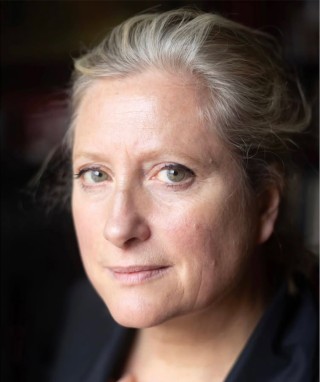
Jane Bennet, the eldest of the five Bennet sisters, is an undisputed beauty, but Austen tells us Jane also “unite[s] with great strength of feeling, a composure of temper, and an uniform cheerfulness of manner.” In this episode, we sit down with Susannah Harker—beloved by Janeites for her portrayal of Jane Bennet in the iconic 1995 adaptation of Pride and Prejudice—to explore the nuances of Jane’s character and Susannah’s experiences bringing her to life on screen. We also touch on Susannah’s theatrical heritage, the enduring appeal of the 1995 miniseries, and her plans for a new comedy-drama project, Jane Bennet’s Second Spring.
Two ways to enjoy this episode:
- Watch the video version on our YouTube Channel.
- Listen to the episode on your favorite podcast app or use the player below. A transcript is also available below.
Actor and writer Susannah Harker is best known to Janeites for her role as Jane Bennet in the 1995 BBC Pride and Prejudice miniseries. Her extensive television work also includes many roles in mystery series and contemporary and period dramas, and she received a BAFTA award nomination for her role as Mattie in the original House of Cards. Among her film roles is that of Titania in A Caribbean Dream, an adaptation of A Midsummer Night's Dream. On stage, she has starred in Abigail’s Party, The Glass Menagerie, and many other plays. Harker is currently writing a script for a new comedy-drama project, Jane Bennet’s Second Spring.
Show Notes and Links
Many thanks to Susannah for joining us on Austen Chat! You can keep up with Susannah and her project, Jane Bennet's Second Spring, on Instagram: @jbssfilm
 Listen to Austen Chat here, on your favorite podcast app (Apple Podcasts, Spotify, and other streaming platforms), or on our YouTube Channel.
Credits: From JASNA's Austen Chat podcast. Published December 4, 2025. © Jane Austen Society of North America. All rights reserved. Theme Music: Country Dance by Humans Win.
Transcript
This transcript has been lightly edited for clarity and readability.
[Theme music]
Breckyn Wood: Hello, Janeites, and welcome to Austen Chat, a podcast brought to you by the Jane Austen Society of North America. I'm your host, Breckyn Wood from the Georgia Region of JASNA. Listeners, it's finally here! Happy December 2025, and a very happy 250th birthday to the reason we're all here—Jane Austen herself. As a special present to all of you, my guest today is none other than Susannah Harker, the woman who played the sweet and beautiful Jane Bennet in the 1995 BBC adaptation of Pride and Prejudice. Susannah Harker trained at the Central School of Speech and Drama in London. In addition to her iconic role as Jane Bennet, Susannah has appeared on television in many roles in mystery series and contemporary and period dramas, and she received a BAFTA Award nomination for her role as Mattie in the original House of Cards. Among her film roles is that of Titania in A Caribbean Dream, an adaptation of A Midsummer Night's Dream. On stage, she has starred in Abigail's Party, The Glass Menagerie, and many other plays. Welcome to the show, Susannah.
Susannah Harker: Hello. Hello. It's so lovely to be here. Hello.
Breckyn: Okay, so to start, can you tell us a bit about your Austen origin story? When did you first encounter her works, and did you like her before you auditioned for Pride and Prejudice?
Susannah: Well, I had a bit of a slow introduction. I was only 14 when I read Northanger Abbey at my convent boarding school, and it was presented in quite a dry way—in that way when people read going around the room. So it wasn't the best introduction, I have to say, to Austen at the time. Also, because I think Northanger Abbey is quite a sophisticated book, actually. It's—the heavy irony that it's delivered with, really, was lost to me at the time. I was a little bit too young, I think, to appreciate that. It's only in later years that I've really appreciated it for all of that—for that aspect of it, and the humor and the lightness. I love it now but at the time it was a slow burn. I wasn't sure. I was more attracted, I suppose, to Dickens and to Brontë, and to the more churning, darker, Victorian books at the time. So, it wasn't until much later, much later, that I was reintroduced to Austen, and to the genius and the sparkling wit of Austen. And then I became hooked. And that wasn't until I was offered Jane Bennet to play.
Breckyn: Can we, for one second, talk about how you read Northanger Abbey in a convent boarding school? I mean, that had to have added somehow. Maybe it all went over your head, but was that place anything like Northanger Abbey?
Susannah: Yes, very much like that.
Breckyn: That's awesome.
Susannah: Gothic and dark, but also—and a lot of wood, a lot of—but it was more Victorian, actually, than Georgian in style. But yes, I know what you mean. And looking back, I definitely think that I brought that experience, in a way—the convent experience (inaudible)—into Jane Bennet, for instance, and that sense of being in an all-female, archaic environment in my formative years, I think, most definitely contributed to being able to get inside period characters. Yes.
Breckyn: That is awesome. I know you said that it didn't really sink in at the time, but what a great story about like, "Oh, yeah, I read Northanger Abbey at a Catholic boarding school in a convent." I mean, Catherine Morland would be delighted. Okay, in addition to that really fun fact, I just barely learned this and was blown away by it. I did not know that your mother also played the part of Jane Bennet.
Susannah: Yes, yes, my mum. My mum who is upstairs, actually, as we speak. I'm visiting my mother here in West Sussex.
Breckyn: Tell her we all say "hi."
Susannah: I will tell her that. I'm trying to persuade her, actually, to come and do an interview with me, a Zoom interview, about us both playing Jane Bennet, which I think would be good.
Breckyn: How did that conversation go? For people who don't know, it was—she played it—Polly Adams, right, your mother?—in the 1967 BBC television adaptation of Pride and Prejudice. So how did that go when you got to tell her?
Susannah: Well, she was thrilled. She was absolutely thrilled and supportive, and has an absolute connection with Austen, as my whole family had. My grandmother also was a huge fan of Austen, and used to read Pride and Prejudice every year. Whenever she was feeling a bit gloomy, she'd reach for that. So one of my earliest memories is my grandmother walking across this very room, actually, clutching a copy of Pride and Prejudice, and taking it to her bedroom because she wanted to be lifted again and again and again. That was her go-to novel. So my mother, yes, played Jane Bennet in the 1960s, which was a strange production by all accounts. I haven't seen it.
Breckyn: I'm not familiar with it.
Susannah: Most people aren't. And I've only seen clips, small clips of it on Zoom, I mean, on YouTube. But I know that it was a typical BBC's—they cut out Mary. So Mary was lost.
Breckyn: Poor Mary.
Susannah: And it was very much a drawing room drama, as they often were, before really, before our Pride and Prejudice '95, which really blew open the drawing room doors, I always say that, and Andrew Davies brought in nature, really, and the outside, and the men much more. So it was, I think, a fairly static, very sweet production, but I'm not sure how exciting it was.
Breckyn: Sure. No, I've watched some of the earlier ones, and I don't think I really realized how revolutionary the 1995 one was until I went back. My sweet father, who doesn't understand Jane Austen at all, one Christmas when I was in high school, got me a set of the old BBC ones from the '70s and '60s, and I watched them and was like, "I'm not loving this." Because, like you said, it's very static. It is like they're all on a stage and monologuing. It just wasn't a style that I was familiar with or prepared for, and I was used to your production, and then the Emma Thompson Sense and Sensibility and things that are very dynamic. It was a shock, and it wasn't really something that I was expecting, so that was interesting.
Susannah: I think Andrew Davies very, very deliberately went into exploring the deeper layers of it and bringing that to the surface, and taking us out into nature and into the wildness of nature to illustrate what was going on underneath, really, rather than a very superficial experience of it and literal experience of it. He went out and created something much more dynamic that we all relate to now, and filmic, obviously. And it really was Andrew's adaptation that took us away, I think, and out into the wild, that then has created all of those dramas ever since in the same way.
Breckyn: He was a real pioneer, a real trendsetter.
Susannah: It's definitely in there, in the books, as we know, Lizzy taking walks, and the outside world is there, very much part of the novels, but was neglected pretty much in those studio dramas, mostly because it had to be, and it was cost-effective, so they were all inside on set. Even, I think, the Laurence Olivier version is fairly indoors most of the time, isn't it?
Breckyn: It is, yeah. It's very much in the drawing room. I think one time they're in a carriage when Lady Catherine shows up. So your dad, who played Colonel Brandon—thank you, Google, for telling me all these things—and your sisters are actors, too. So what was it like growing up in such an arts- and theater-oriented family? That sounds really fun.
Susannah: Of course, I've never known any different so it's very difficult to say. But I suppose, yes, I used to write copiously when I was a child. I wrote lots of very, very, very romantic novels. And my sister Caroline was unimpressed and used to, apparently, groan. Well, I remember her groaning and saying, "Oh, not another boring novel." And my mum used to say, "It's hardly the Brontës, is it?" Then we did Charades. We did the whole, of course—performance,I suppose, was to a degree present, in our family, and still is. My son is a director, a theater director, and he's just directed Pride and Prejudice sort of, he's assistant directed on that. I was pregnant with him 30 years ago while I was doing Pride and Prejudice.
Breckyn: I don't think I knew that. Wow. No.
Susannah: How strange. Yes, I was. I was carrying Finn. So he's also gone into Austen territory himself 30 years on, and completing the circle.
Breckyn: It's this wonderful legacy. You're also the great-great-granddaughter of a famous theater set designer as well.
Susannah: Joseph Harker. He's there behind me. There he is.
Breckyn: Oh, cool.
Susannah: Joseph Harker. He was Henry Irving's scenic painter. And at the time, scenic painters were like filmmakers, really, because there wasn't a film or TV or any of this. So yes, and so he was quite revered in that position. And there were lots of—they were actors or scenic painters, and his mother was an actress and took him on stage. And they go way back on that side to travelers in the street, not travelers, jugglers. Jugglers in the street, Mum has always said. So there's a theatrical tradition for as long as we can remember going back.
Breckyn: That's such a beautiful legacy. And, as I've learned more about Austen, I've learned about her family, and there are parallels with Austen's own upbringing and yours, that she grew up in this very lively, literary family. Her parents and her siblings, they all like to write poems and plays, and they would put on plays in the barn, and riddles and jokes and lengthy letters. Some of her brothers started a newspaper or a periodical while they were at Oxford. I think often people think of great minds or artists as these isolated one-offs, but really they're a product of a larger society, or of a family. I love how theatrical your family is. I think that's wonderful.
Susannah: Thank you. Well, we're all keeping going in it, musicians, and my niece—actually, this is quite interesting. Just two days ago, three days ago, I went to see a production of Emma, which was quite wonderful, with my mother at Chichester Festival Theatre, and my niece, Ceci, had designed it.
Breckyn: Oh, awesome.
Susannah: It keeps going.
Breckyn: Yeah, so behind the scenes, continuing that behind the scenes in front of the scenes.
Susannah: Yes, behind the scenes, exactly. So she had designed it as the most wonderful touring production, which started off in Bath of all places. Must have been wonderful to see it in Bath. So that's doing a national tour at the moment. But it's really quite a (inaudible) if anyone can see it, I know you're over there so you're (inaudible) it, but, if you can get clips of it, it would be fantastic.
But so that's my niece as well. We got a couple of musicians, and it doesn't seem that anyone at the moment is bucking the trend and going into accountancy. My son teaches as well. Teachers—there is some teaching going on, so that's good.
Breckyn: Okay, so let's talk about Pride and Prejudice. Can we just acknowledge for a minute that you were cast as Austen's hottest heroine? I have a few supporting quotes from the book if we want to read. They're always talking about Jane's looks and how nice she looks. Honestly, it's mostly Mrs. Bennet constantly talking about her beauty. So that had to feel nice, right? How did that feel being cast?
Susannah: Oh, gosh. Well, of course, you were lovely to be cast, but you don't realize that's a bit of a burden when you're cast as a great beauty, because, obviously, most of us don't think of ourselves as—but also I think, yes, I never really considered that. I knew that I had to focus on the grace, I suppose, and her movement in order to bring her character alive. And I think that's really what the beauty also refers to, especially in those times. I think it was much more about her inner beauty, her grace, and the way she moved, and the way she presented, and her languidness, I suppose, or grace. And so rather than think about, "Gosh, I'm being cast as the beautiful girl," I tried to get inside what most people think of as as being beautiful, as presenting as beautiful. And I know that she describes in the book—she doesn't describe characters very often, as you know, Jane—she just certainly didn't physically describe them, so that was completely up to me, up to us. But she'll give one or two— she does talk about her languidness. So I latched onto the word languid, and I thought, "I'll keep her laid back and I'll keep her slower."
There's a bit, and I can't remember which chapter it is now, I'm sure people out there will know, but she is a lot slower in her demeanor and in the way she moves compared to Lizzy, who's obviously dynamic, current, present, and striding out. So that gave me a lot of clues, I suppose, because there is no physical description. She rarely physically describes any characters. I think she does once, and I can't remember which character it is. But then again, I know you lot will know as well. But it's extraordinary, isn't it, how we can instantly visualize these characters without any physical description of them?They come alive to us in our minds.
Breckyn: Absolutely. Well, the power of adaptation is that you for many generations have defined what Jane Bennet looks like. I think that that's, like you said, maybe a bit of a burden and a curse, but also, I mean, how wonderful that so many people, when they go back and read it, I mean, I know I often do, I'm just like, "Oh, there's Susannah Harker. That's what she looks like."
Susannah: That's so funny. I mean, I think I suppose her profile is what I was interested in, to give her a Grecian look, to make the lines of her costume—so Don Bright [sic], who was the costume designer, was so fantastic because we realized that we had to make her look, bring her elegance, highlight on that elegance. So if we did—there was a long neckline, and there was long, everything was quite long and elegant, compared to Lizzy, who had a much shorter style, really.
Breckyn: Yes, she's got those short little curls right by her face, and things like that. I've seen people describe your look in that adaptation as Grecian, and as we know that standards of beauty change over time, and they change based on different societies, and probably what they would have most admired in the Regency era is that classic Grecian look. So that's what everyone was going for, your hair and your costume and all of that.
Susannah: Yes, exactly. That was a very conscious decision to do that.
Breckyn: Well, and so I said I have some quotes. One of the quotes that I really like that isn't from Mrs. Bennet is from Lizzy, and it's when Jane and Lizzy are talking after, I think, the first dance where they meet the Bingleys and Mr. Darcy, and it says, "He could not help seeing that you were about five times as pretty as every other woman in the room." But, unlike Mrs. Bennet, she doesn't dwell on it and think that's your value or Jane Bennet's value, or the only thing that she's good for. Lizzy acknowledges it and then just brushes past it like, "Yes, obviously, you are the best-looking person here. Everybody knows that. Let's talk." And then she moves on. She doesn't really think that that says much about Mr. Bingley, that he admires Jane Bennet's beauty because it's so obvious to everybody. She's so good-looking. We know that Lizzy is willing to acknowledge it but it isn't the thing that she values most about her sister. Like you mentioned, Jane Bennet has this quiet strength and this grace, and she's really a genuinely good person. So you've talked about those outward things that you focused on, languidness and maybe slow ballet movements.
Was there anything that you were focusing on internally about Jane Bennet's character when you were portraying her?
Susannah: Yes, I think it's very, very rare, it's very rare to get a totally good character. And she is, and she is. And so tuning into that, I think, I was very consciously trying to explore the essence of goodness, really, and what goodness is like, and without making it a little bit boring, because it might be, it might be. But she isn't, I don't think. I mean, the character herself isn't boring because of that quiet strength and inner strength that she has, and her reserve, but also her ability to accept the rejection of love, and her goodness and kindness, which is so innate in her, that she doesn't go to bitterness, and fury, and rage.
Breckyn: Like Mrs. Bennet. She's such a contrast to her mother.
Susannah: Exactly. Or even Lizzy, or even—she doesn't possess that. She's one of those people who accepts, and forgives, and turns away, and it's an extraordinary ability that she has. That was interesting to experience.
Breckyn: I pulled out a couple of paragraphs from the book because it highlights one of the quotes that I think best exemplifies Jane Bennet, and in a way that people don't typically think of her. I think they think of her as pretty, and nice, and sweet. But this quote, I think, really highlights her strong backbone and her strong moral worldview that she knows what's right, and she's going to do it. And I really admire that about her. I don't think writing her off as a milksop is an accurate representation of who she is as a character. She's really actually very strong.
Susannah: And very much based on Cassandra, of course. That's also where I went and explored and looked for inspiration, because Cassandra had the most extraordinary stoicism and qualities after the death of, when he was only 24, she was 21, I think, when she lost her fiancé. And they both resolved to survive together, and she looked after—so it's that resilience, I think, that exists in Jane Bennet as well.
Breckyn: I think it's really admirable. Okay, are you ready?
Susannah: I think so. Okay.
Breckyn: Oh, yeah. No, I'm the one reading with a professional BAFTA award-winning actress. No big deal, no. Okay, so I'm going to read the narration part and the part of Lizzy. Okay, so this is when Elizabeth is telling Jane the story of Mr. Wickham from Mr. Wickham's perspective, so we don't really know Darcy's perspective yet. "Jane listened with astonishment and concern; she knew not how to believe that Mr. Darcy could be so unworthy of Mr. Bingley's regard; and yet, it was not in her nature to question the veracity of a young man of such amiable appearance as Wickham. The possibility of his having endured such unkindness, was enough to interest all her tender feelings; and nothing remained therefore to be done, but to think well of them both, to defend the conduct of each, and throw into the account of accident or mistake whatever could not be otherwise explained."
Susannah: "They have both...been deceived, I dare say, in some way or other, of which we can form no idea. Interested people have perhaps misrepresented each to the other. It is, in short, impossible for us to conjecture the causes or circumstances which may have alienated them, without actual blame on either side."
Breckyn: "Very true, indeed; and now, my dear Jane, what have you got to say on behalf of the interested people who have probably been concerned in the business? Do clear them too, or we shall be obliged to think ill of somebody."
Susannah: "Laugh as much as you choose, but you will not laugh me out of my opinion."
Breckyn: Thank you. Oh, my gosh, it's so funny how you sounded different. You sounded like Jane Bennet.
Susannah: Did I?
Breckyn: You did. You embodied the character.
Susannah: A long time ago, Breckyn, a long time!
Breckyn: It was so wonderful. Yeah, that line right there, "Laugh as much as you choose, but you will not laugh me out of my opinion." I think if you pulled that out and polled people, "Who do you think said this quote?" most people would be like, "Oh, that's Lizzy. That sounds so much like Lizzy." And it's not. It's Jane. She really is willing to stick to her guns, and I admire that about her.
Susannah: She's a woman of fiber.
Breckyn: Absolutely. Well, we already touched on this a bit but the 1995 Pride and Prejudice, obviously, has become iconic. What do you think made that adaptation resonate so strongly then and now? You already talked a bit about—what was the phrase you used? Busting down the doors?
Susannah: I think it is blasting open the drawing room doors into nature, going wild, and bringing in the masculinity as well into that very female story, and bringing those right in, and tapping into that, and the undercurrents, and the whole of the iconic lake scene, which is just really tapping into what's going on underneath, really, and bringing that to the surface. So I think all of that, really. I remember reading it for the first time and thinking it was astonishing. I know Andrew Davies said that some students actually put in that scene into a paper because—it was a bit of a problem. But yes, I think it is about just smashing wide open those doors, and getting into nature, and bringing that bucolic, and also the rosy, bucolic English countryside and all the shires just sparkling away on our screens. I think that that really really helped people.
Breckyn: I think to Americans, a lot of Americans, to me, at least, the English countryside is like a fairytale almost. Maybe it's because that's where a lot of our fairy tales come from. But something about it, even though it's real, they're really out in true English countryside, it feels fantastical, to me at least in some way. I went to the Lake District this summer for the first time, and, I mean, it's the land of Wordsworth and of Beatrix Potter, and it's just breathtaking.
Susannah: Yes, it is. I do love England. I do love it. Yes, I know exactly what you mean. I think it did deliver in that way, Breckyn. I think it was very rosy. It wasn't a gritty version, unlike the film, which was about getting in the mud and getting dirty, which was great as well, and that worked in a very different way. But I think this presented a very rosy bucolic picture, as I say, and I think people really responded to that. And I think it lifts. I've met people over and over again for so many years now who say that they go back to it to to lift their spirits and to put them into—and I think the novel, going back to my grandmother, had that effect as well, and helped people, to lift them, really.
Breckyn: It's medicinal, 100 %. There are papers written about how Jane Austen's books were given to soldiers during World War One and World War Two, and in convalescence, and there's something about it that heals the soul and nourishes it. And I think the 1995 Pride and Prejudice has done the best job of capturing that, taking it from the page and capturing that.
Susannah: Absolutely, capturing that element of it. I think people do find it very reassuring and uplifting, and she does have a very sanguine, if that's the right word, effect. It makes people feel grounded and good. It's about her drive to explore integrity, really, ultimately, and to have characters, but ultimately, Jane Austen drives through to a moral core of things, and it is always in that way.
Breckyn: Yes, and despite all that, the beauty and the bucolic nature side, or the scenery and all of that, you can never be completely lulled because she has this biting, sharp wit that wakes you up and that makes you laugh.
Susannah: Yes. We know all of those people over and over and over again, and we still see them. That's what's so extraordinary, the reaching across the decades to us now as if there's no time between. And we know all those people. We all know Mrs. Bennet, have known Mrs. Bennet.
Not my mum, who's upstairs.
Breckyn: I was going to say, they will remain nameless, but we know who they are.
Susannah: We will. But also to be even older ourselves, we also appreciate the older characters and see them in different ways, I think, and relate to them, and have empathy with them.
Breckyn: Yes, I've said this before, but as you revisit her, Jane Austen, again and again, you do start to sympathize with those characters that you criticized before because age teaches you new things.
Susannah: What happens in life. She is so observant of that, and seems to understand every age and every character so uniquely well in a way, and have an innate understanding of human nature that you don't appreciate until you've read it several times, and then you can see as you get older, you go, "How did she know that?"
Breckyn: Yes, she's the best at human nature. It's just her and Shakespeare. It's an insight into the soul. Do you have a favorite behind-the-scenes memory from filming that still makes you smile? I will tell you, so two years ago, we had Adrian Lukis on. So fun talking about Wickham with him, and he was talking about being naked in the hot tub with Colin Firth. And we were like, "Oh, my gosh!" He was getting really sensationalistic. It doesn't have to be like that.
Susannah: I really can't tell you about being naked in the hot tub, mostly because I was actually pregnant so it would have been deeply inappropriate for me to be naked in a hot tub. And in fact, I used to disappear because I was pregnant. I wasn't pregnant for the first two months, but then I became pregnant for the last four months. So it was a six month shoot, and so I would often, when the crew were all getting together, and the cast were all getting together and having drinks at the end of the day, I would be retiring to bed very early in a—
Breckyn: Or in a barfing in a hedgerow.
Susannah: —in a Victorian white nightie. And then we were filming somewhere called the Bell Inn, and I think it was near Oxfordshire. I'm not sure which shire it was but one of them. And it was a very famous old haunted inn. So I went to bed at about nine o'clock while everyone else was at the bar, and they were having a particularly raucous evening, I think, that evening. I've been told that this—I kept being told that, "The hotel is haunted, the hotel is haunted, the corridor outside your room is haunted." And I thought, "I just mustn't think about it (inaudible) about it." So it took me some time to get off to sleep, which was a little bit like Northanger Abbey, this experience. And so I did eventually get off to sleep, listening to all the noises going on downstairs. And then there was a rattling on my door.
Breckyn: Oh, no.
Susannah: Suddenly, at about four o'clock in the morning. So I sat bolt up right thinking, this is the ghost.
Breckyn: It's Jacob Marley.
Susannah: So I said, "Oh, hello" I said, "What is your name?" The ghost, who I thought said Kevin (inaudible) name for a ghost.
Breckyn: That's a terrible name for a ghost.
Susannah: A terrible name, unlikely name for a ghost. So I said, "What do you want of me?" And the handle shook a bit more, and then there were footsteps, and it went back into the corridor, went away. The next morning, and I will not say who it was, I did—there were two actors, or one of the actors, one of the sisters and a visiting boyfriend, and the door was wide open, and I realized that the visiting boyfriend had been the ghost.
Breckyn: Found the wrong room.
Susannah: That's my memory, I'm afraid. That's a memory. But other than that, so I was really quite outside of it, because I used to have to get up at five o'clock in the morning and get my hair, because I was the only one who had my hair done, weaved into that Grecian effect. I have lots of memories of the ballroom scenes, which were extraordinary, when we came back to shoot, and they had to disguise my pregnancy then when we came back.
Breckyn: Empire waists are good for that, right?
Susannah: But the bosom is also quite responsive, I discovered. So there were lots of hushed, "Quick, get her back into the fitting room." But I do remember those long, long days of not being able to sit down because my hair was in this extraordinary thing, not being able to lie down on it. I have many, many fond memories. The girls all together, the dining room scenes, all sitting around there. We laughed a lot. When Julia Sawalha came on, she'd been on another job. Julia came on later, and she was playing Lydia. She brought in all the Lydia energy to that house and the Bennet household.
Breckyn: She's great.
Susannah: She's so fantastic.
Breckyn: Speaking of bosoms, in the whole adaptation, everyone's bosoms are up to their chins. There's so much bosom.
Susannah: It was the bosom which wasn't actually quite right. I mean, really, if you look at—it's not the ideal Regency silhouette, really, because mostly those dresses were not worn with such a bosom, but we were a little bit more Victorian in that respect.
Breckyn: Okay, so—oh, sorry, do you have any more memories you wanted?
Susannah: I can't remember, yes. But we used to sit around and laugh, and doing those dining room scenes was a very bonding moment for us all. And Julia used to do lots of voices from Brief Encounter, from the café in Brief Encounter the film. There was the lady who works in the café, and we always used to say, "'ere, 'ands off me Banburys," which is a line. I can't believe I'm telling you this. I feel slightly embarrassed.
Breckyn: It's funny. I like it.
Susannah: And that used to crack us all up. And so we used to often be in fits of laughter before a take and having to get it together. So it was a fantastic feeling. It really was a bit like going back to the convent, really.
Breckyn: That's so great. That's a lot of fun. So if you could play any other Austen heroine, do you have one in mind who you'd like to portray? If you could...
Susannah: Oh, well, I mean, I'm obviously not going to be cast in it now.
Breckyn: No, in an ideal world.
Susannah: In an ideal world, well, I think Anne Elliot is my favorite.
Breckyn: I love her.
Susannah: I love her.
Breckyn: There's that quiet strength again.
Susannah: Quiet strength. And what she's—I love that book. That's my favorite book.
Breckyn: No, that's a wonderful one. I always think that there aren't—Persuasion doesn't get enough adaptations, I think.
Susannah: We're on the brink of the next Pride and Prejudice, of course, coming out soon, aren't we?
Breckyn: It feels too soon. That's crazy. They've been doing audiobooks. There was a full cast audiobook that Audible just did. I wonder if that counts, if that counts for our once a decade.
Susannah: I didn't know that.
Breckyn: Lately you have been revisiting Jane Bennet in your creative work. Can you tell us a bit about Jane Bennet's Second Spring?
Susannah: I guess it's a midlife coming-of-age story, really, which draws my own personal life and experience. It's about navigating midlife and female visibility, which all sounds very serious but it's not very serious. It's a comedy. It's a comedy drama, so there is a serious tone to it.
Breckyn: I mean, that's Jane Austen, right? It sounds very serious but also hilarious.
Susannah: Exactly. Jane Austen does come into it, and my own relationship with the Austen fan world, actually, and how that helped me navigate a particular time of my life, and how Austen herself helped me navigate a particular time of my life, and the kind of advice and message that I got from Austen. And so that's what I'm writing about. And so we're doing well. There's a lot of interest. It looks like it, hopefully all being well, will go into production in 2026.
Breckyn: Okay. Is it a play, a short film?
Susannah: No, a film.
Breckyn: A film, okay.
Susannah: Yes.
Breckyn: Is it a one-woman show? Are there other characters?
Susannah: No, no, no. There are lots of characters, lots of different characters. And hopefully, I think there'll be some characters from the original, from Pride and Prejudice '95 in it as well.
Breckyn: That's very exciting. So what has it been like revisiting it 30 years later? I mean, it's a big year for Jane Austen but it's a big year for the BBC production as well. It's the 30-year anniversary. Have you been reflecting on that a lot this year?
Susannah: Yes, a lot, because I've been doing a lot of these meetings and interviews, and it was an extraordinary thing to go to Baltimore and be out there with the JASNA lot. That was quite wonderful because I've been writing about it as well. I can't talk too much about it because it's still in process, but to actually go and physically see all of those wonderful people dressing up and the enthusiasm behind it was a real tonic, I suppose. That's good. Very uplifting and really gave me a tremendous spur into the next stage of this script.
Breckyn: Well, that's great because you were describing in the beginning about how many people have told you how much that movie has meant to them, and how it has uplifted them. So it's wonderful that they were able to pay that back a little bit. I know. The fans were able to buoy you up. That is so wonderful. This has been so fun. This is a dream come true. Thank you so much, Susannah Harker. Where can listeners find you online if they want to know more about what you're up to?
Susannah: So at the moment, you just go to "jbss," which stands for Jane Bennet's Second Spring, on Instagram. And if you go below, there's a Patreon site, which is coming up soon, which is going to, obviously, have lots of content and information about where we're going next.
Breckyn: That's great.
Susannah: All right.
Breckyn: Well, we will keep our eye out for that. Thank you so much, Susannah. It's been a pleasure. Thank you.
Susannah: Take good care. Bye-bye.
Breckyn: Dear listeners, I just wanted to end today's episode by saying thank you. Austen Chat now has over 100 five-star reviews on Apple Podcasts. We are thrilled and so grateful for everyone who has left a review. If you haven't left a review yet, please consider giving the show five stars on Apple Podcasts. The more reviews we get, the easier it is for new Janeites to find us. Join us again next month for another episode. In the meantime, I remain yours affectionately, Breckyn Wood.
[Theme music]
