
Austen Chat: Episode 31
January 8, 2026
Miss Lambe and Beyond: A Visit with Vanessa Riley
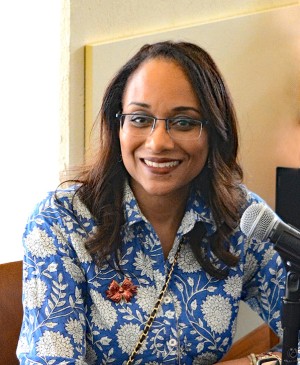 Jane Austen lived during a remarkably dynamic period of British history and was well aware of the forces shaping her world—colonial expansion, booming global trade, revolutions in Europe and the Americas, and yes, slavery and the abolition movement. It was also a world that included people of color whose lives were far richer and more influential and varied than often assumed today. In this episode, we talk with author Vanessa Riley, who is eager to share their stories.
Join us as we discuss Miss Lambe—Austen’s mixed-race heiress in Sanditon—and meet some notable Black figures from Austen’s time, such as Dorothy Kirwan Thomas, who was born enslaved but went on to build a Caribbean business empire. Vanessa also shares some of her experiences as the historical consultant for Hallmark's 2024 adaptation of Sense and Sensibility.
Dr. Vanessa Riley is the author of over 25 novels across the genres of historical fiction, romance, and mystery, including a trio of books based on the true stories of extraordinary women during the Regency era: Island Queen, Queen of Exiles, and Sister Mother Warrior. Her works spotlight hidden narratives of Black women and women of color. Vanessa was the historical consultant for Hallmark’s 2024 adaptation of Sense and Sensibility and the 2024 Georgia Mystery/Detective Author of the Year for Murder in Drury Lane. With a doctorate in mechanical engineering from Stanford University and other engineering degrees from Penn State, she brings a research-oriented approach to her inclusive storytelling about the Caribbean and the Georgian and Regency eras.
Show Notes and Links
Many thanks to Vanessa Riley for joining us on Austen Chat!
- Learn more about Vanessa and her work on her website: vanessariley.com
- Follow her on Instagram @vanessarileyauthor.
 Listen to Austen Chat here, on your favorite podcast app (Apple Podcasts, Spotify, and other streaming platforms), or on our YouTube Channel.
Credits: From JASNA's Austen Chat podcast. Published January 8, 2026. © Jane Austen Society of North America. All rights reserved. Theme Music: Country Dance by Humans Win.
Transcript
This transcript has been lightly edited for clarity and readability.
[Theme music]
Breckyn Wood: Hello, Janeites, and welcome to Austen Chat, a podcast brought to you by the Jane Austen Society of North America. I'm your host, Breckyn Wood, from the Georgia Region of JASNA. Listeners, today is an exciting first for Austen Chat. We are recording in front of a live audience. We are at Emory University's beautiful Rose Rare Book Library in Atlanta, celebrating 250 years of Jane Austen with a one-day conference put on by JASNA Georgia. My guest today is Dr. Vanessa Riley. She is the author of over 25 novels, including a trio of books based on the true stories of extraordinary women during the Regency era: Island Queen, Queen of Exiles, and Sister Mother Warrior. Her works spotlight hidden narratives of Black women and women of color. She was the historical consultant for Hallmark's Sense and Sensibility, and the 2024 Georgia Mystery/Detective Author of the Year for Murder in Drury Lane. With a doctorate from Stanford University and other engineering degrees from Penn State, she brings a research-oriented approach to her inclusive storytelling about the Caribbean and the Georgian and Regency eras. Welcome to the show, Vanessa.
Vanessa Riley: Thank you for having me. I love my studio audience.
Breckyn: I know. This is so awesome. I'm never going to be able to go back to just doing this in my closet again. Okay, so to start off, Vanessa, tell us your Austen origin story. When did you first encounter her work?
Vanessa: Well, I always have to blame my mother. She is the root of everything good that I've ever done. She was a historian, or very much into literature, so she was always pushing us—Shakespeare, Baldwin, Thoreau, Wadsworth. You know . . . I can rock with some Hiawatha. But at the same time, my father's a mathematician, and so physics, and logic, and engineering, and all these great things. But then she pushes Pride and Prejudice in front of me. And I'm like, "Wow, that woman's got some snark. I like this!" And we keep going until we get to Sanditon, and the richest woman of marriageable age is a biracial woman from the West Indies. And I was like, "That's Black enough for me! Yes, I'm home! That's where we're at." So, to me it makes sense, and ever since then, I've been devouring every novel, every letter that I can possibly get, and then looking at a greater context, because Austen is not just a point. She's living in a world; she's living in a world that has war, a world that has enslavement, a world that has, still, discovery, and religious expressions, and freedoms, and everything. And it's like, "What does that look like from where you are, and at what vantage point?" And so those are the kind of novels I write.
Breckyn: That's incredible. So, from a young age, Austen has just been part of your background.
Vanessa: I'm a nerd. Actually, I'm a nerd's nerd. You know, the one that hands the pocket protector to your nerd?
Breckyn: You're like the nerd on so many awesome levels, because my next question is how did you go from a PhD in mechanical engineering to a historical fiction author? Can you chart that path for us a bit? What started you on this path down Austen and the Regency era?
Vanessa: So I have to blame my mother. Once again, we're sitting here, and I'm winning writing competitions. I'm also on the science team and all these sorts of things. And my mom sits me down and she's like, "Baby, I know you like to write, but you always have to pay your bills." So, we did the engineering route, and it was amazing. I worked for NASA, I worked for General Motors, Hewlett-Packard—all these great things. If you have a Cadillac, a certain model, and it's quiet—I'm your girl. I made it. High-pressure turbo pump. But I remember distinctly, I was working on a die cast manufacturing project and my boss goes, "Vanessa, There's too much information. It's too detailed. I don't want to feel like I'm there. Could you tone it down a little bit?" The writing bug is still there, and it's going to come out. It's going to manifest in some form or fashion. And so, when I was pregnant—it was a difficult pregnancy, and my doctor said, "If you want things to work out well, you have to sit down and do nothing for four months." That's like a death sentence, right?
My husband's walking on eggshells. Just picture "military man walking on eggshells." He brings down a box of some of my old journals from high school, and I'm like, "I could write this better. I know—" No, I did not know stuff. I did not write it better. I wrote it horribly. But that was the origin of starting the writing again, and going to classes, and learning techniques.
Breckyn: Yeah. So, this trial and bad time in your life transformed into something amazing.
Vanessa: And I got the kid! The kid lived! She's good. She's in college now.
Breckyn: That's amazing. That's awesome. And so, how has Austen's work influenced your own storytelling? Are there aspects—you mentioned snark. That is one of my favorite things of Austen. I just think she is so funny and a little bit acerbic, and that really resonates with me, and it seems like it does with you as well. So what are those different aspects that you've sort of picked out from Austen for your own storytelling?
Vanessa: I think every one of my heroines, whether I'm writing historical romance, or I'm writing historical mystery, or historical fiction—they got some snark to them. And I love situational snark, where you're sitting there and it's the gorilla in the room. You see this odd situation, and everybody's being so polite, and they're not saying it. And then you get an Austen-type quip where it's like, "It's right there, and you're not mentioning it, and I'm going to say it, and I'm going to do it in a very clever way." So it's not all in your face. It's comments that hit you in the head, like two minutes later. So, I love that. I love that she's bold. Mansfield Park is one of the few that they're talking about the slave trade at that time frame. I mean, the slave trade is the dirty little secret. If I'm drinking tea, I'm participating in the slave trade. If I have sugar, if I have different types of ink—indigo—I'm participating in it. She's literally putting it in the book—the untold—because it's so common. She puts it in the book, and that's why it's still there, and that's why we can talk about it today, and just see the breadth and depth of her. So, I love that, and I want to be that kind of writer.
Breckyn: Yeah, and I think—I've said this before, but, Austen—I think part of her appeal is those coy hints—is that she doesn't tell you exactly what she's thinking. She doesn't give you a sermon about, like, "This is right, and this is wrong." She sort of leaves it up to the reader to make their own conclusion and to sort of participate in the novel in that way. And then we can have debates, and then we can have conferences about it, instead of her just laying out every single thing about what she thinks. And it also leaves room for authors like you to expand on those things that she didn't mention explicitly.
Vanessa: And you think of our contemporaries—like 250 years, we are celebrating her. Every other year there's a new adaptation, something—a new takeoff. If she wasn't—if her material was just regular—pat or trite—no one would care. There's so many authors in history—their books are out there, and it's gone. She lasts, she lives, and we're able to breathe and take a piece of this because she's just dynamic. To me, she continues to live. Short life, but she continues to live every time we pick up one of her novels.
Breckyn: And she doesn't talk down to her readers either, right? She expects you to come up to her level. She expects you to know what she's talking about, and she's not going to spoon feed you. And I really like that about her works. Okay, so I mentioned in the bio that you wrote a book called Island Queen. In that novel you tell the story of Dorothy Kirwan Thomas, who is a truly remarkable figure. So, can you give us an overview right now of who that was? And let's talk about her.
Vanessa: So, when I—my first Regency novel came out, I think, about 2013. And a realization happened very shortly after. People only knew maybe Georgette Heyer's version of the Regency. They may have read Jane Austen, but they forgot about all these other context pieces. So people were saying there weren't Black—I mean, I've heard some ridiculous stuff. "There were no Black people in Regency England." And I'm like, "Okay, what happened? Africa, slave trade, we get in a UFO, and it brings us back in 1865? I mean, what happened there?" So, I'm doing research, and so then when people accepted that there were Black people in England, they were like, "Well, they were probably enslaved." "They got rid of that in 1807." "Okay, well, then they were just servants." There are several millionaires. There's actually a guy who became a millionaire because he figured out that rich people don't want to touch coal. So he dressed up really nicely, got a wagon, and—there's a sheriff. There's Black people all over the place, you know. One of my favorite scenes in the only version of Pride and Prejudice that is allowed—1995 version—
Breckyn: Uh, oh.
[Laughter and applause]
Vanessa: Yeah, 1995 version, yes—Darcy's all hot and sweaty and sexy, and he's walking down the street, and this little boy comes out and gives him some ale. That particular place where Wickham is hiding, on that particular street, you should have seen a person of color. . . just by the location . . . but that's absent in many of the films at that context. So, for me, I needed to find someone who—because I didn't want to—we have a lot of books on enslavement; that's an important story—I didn't want to write that. I was a girl who loved the balls. You know, I want to have that snarky moment with Darcy. I want to write those kinds of stories. And the world was saying, "You don't have a place." So one day, as nerds do, I'm looking through research, and I've come across—I think it's James Gillray. He is one of the political commentators of the time. He's a sketch artist. You find him in the newspapers. Anytime he draws a sketch that has a woman, the woman is always the joke of the piece. So, he's going to make you look garish and crazy. And if he draws a Black woman or a woman of color, they're going to have the big nose, big butt, you name it, all the stereotypical things—you're going to see this, right? So I come across one of his sketches, and it's Prince William, future King William IV, in a hammock—
Breckyn: Oh, in the hammock. I've seen that one.
Vanessa: —in a bed, in a hammock, and he's lovingly embracing a beautiful Black woman. So, knowing Gillray, since the woman is beautiful, she's not the joke of the piece. She's the tattle. "This is what your prince is doing in the Caribbean." And he was literally doing stuff in the Caribbean. He and his boys go all the way round it. So, I start researching because I'm like, "If I find who this person is..." because you can tell by just even the manner of clothing, it's not a servant that he's in bed with. I want to find this story, because this is a real thing. So I do the research. Men, I love you guys. You all write so much. The letters are insane. I track him to the Caribbean. Prince William and his boys actually break a brothel, they're partying so hard in the West Indies. I don't know how you break a brothel, but that's what it says. And he paid for it the next day. So I'm like, "They were having a raucous time." So, he's playboy everywhere they can go until he gets to Dominica. When he gets to Dominica, his boys write back to England," He's different. He's with that woman."
And then I find another—he's dancing with Dorothy Kirwan at the Mulatto Ball. So, I had a name, and then I find all these things, and I find out that she starts her life in enslavement and becomes one of the richest women in the Caribbean. She builds businesses across from Grenada to—it's called Guyana today, but it was Demerara back then—i.e. the sugar, Demerara. All these different colonies. She's building businesses. She has an affair with Prince William. And then, as a rich woman in Demerara, the rebellions are happening, and she has to say—the governor at the time, who is using these Black women like herself, and there's a couple other women that have gotten rich in the entertainment business, to be—whenever governors come or principalities come, they are actually doing the hosting, their society women. Dorothy's house was so grand that politicians would come and sit with her and have tea because she was known for her intellect, her conversation, and she had the best wine. So, we get this picture of Dorothy, and she ends up having to go back to London and save generational wealth because this governor inflicts a tax on women saying that, "You guys should have stopped the rebellions. So every time we have to repair things you are going to be the ones to fix it."
Breckyn: They thought it was the women's responsibility because women are this, like, gentling influence, and so it's your fault?
Vanessa: They should have been able. So, she goes and she reports this governor, has a crazy meeting with the Secretary of War and the Colonies. She gets like, a six-horse drawn barouche, drives that sucker down right in front of Whitehall, and he thinks it's a queen showing up. So that's the only reason he takes the meeting, and she's able to explain what's going on, and he fires the governor. And it's like, "Ain't nobody in the world going to believe this story." So, she was a story I sat on for years. But that was my proof. Like, "Look, this is a woman with upward mobility. She was not limited by her skin. She made a way. Circumstances happened. She made lots of friends." And so I was ever thankful of being able to finally pitch that story. And I think that's what really launched people taking another look at my novels and saying, "Wait a minute, this person is telling this story about these pieces of history that we should already connect." There are hardships, there are terrible things that happen, but there's a lot of people who survived. The reason we are sitting here today, somebody survived, somebody made it through. And I think we need to see those stories.
Breckyn: No, absolutely. And she is such a fascinating figure but, also, I mean, she owned slaves as well, right? Like she started in enslavement, was able to buy her own freedom, worked to buy the freedom of her family, but then owned slaves, which complicates things a lot. And then—well, the fact that I read that I thought was so fascinating is she may be the only woman of color who received money from the British government when slavery was abolished. They paid the slave owners because it's like, "Oh, yeah."
Vanessa: There's three other women.
Breckyn: Okay. So, she's one of very few women of color who received money because they abolished slavery. And they're like, "Well, sorry, you're going to lose money because you can't have these slaves anymore," which is just bonkers. So what are your thoughts on that?
Vanessa: That was the hardest part of the book to write. But I am a firm believer—I will not whitewash history. If it happened, and I'm telling the story, I have to be honest with the story. Some people—I sit around with groups of friends, and they were like, "Why don't you just end it before that?" I'm like, "The book doesn't—you've got to show her whole life, and we have to be honest with it." But I also showed her rationale. When you look at the records, the number of enslaved people that she owned, as well as the other women of the Entertainment Society, is what I think I called them in the book, is more than could actually work the land. Like by 20X the numbers. She owned, I think, somewhere between 2-40 acres. And you go through, and you count it out with the spacings. What is she possibly actually doing? She's buying people to keep them from being owned by other folks. I know that the records show that she taught them how to be entrepreneurial, how to sell goods. Now, does that make it right? No.
Breckyn: But she's working within a system that already exists that she's still constrained by.
Vanessa: So one of the pieces of the novel is, "Is it better to protest or to have a seat at the table?" And I firmly believe Dorothy decided she wanted to be a seat at the table. And within Demerara, at that time frame, if you went against the system, the other plantation owners made you go out of business. Like her Jewish son-in-law was run out of business because he refused to have slaves. They made sure he paid higher prices for things, the interest rates on just—and you can literally look at the records and see the loan documents and things like that of how they made him falter. And, unlike her son-in-law, Dorothy knows that at that time frame, if you're a Black person and you run into debt, you can be re-enslaved. And that is her biggest fear of anything, from everything I've read—the way she would have documents read by three or four different people just to make sure it said what it said, because of a lack of trust. So, the beauty of being able to tell Dorothy's story—the good, the bad, the ugly—is to put it in context of her situation.
But like I said, if I find it, I'm going to put it in the novel, because it is my responsibility. This may be your only piece of this woman's history. I'm going to tell everything—the good, the bad, and ugly.
Breckyn: I like that your goal is not like, "Let's deify her and put her up on a pedestal, like make her a saint." And now she's the poster girl for like, "There are Black women in the Regency era." And it's like, "No, she's this really complicated, very interesting, sometimes problematic person."
Vanessa: Yes. And if you read about the men in her life, very problematic. Very problematic.
Breckyn: But that's something that I really like about Jane Austen, is that almost none of her characters are all wholly good or wholly bad. A lot of them are very complicated. Even the ones we don't like might be amusing or might have a good side, except, again, for Mrs. Norris, who is just the spawn of Satan. But everybody else—
Vanessa: Some people cannot be redeemed, unfortunately.
Breckyn: Exactly. No. Okay. So, Dorothy is really interesting because she's born in 1756. She dies in 1846. And so she was born before Austen, died after her, and [inaudible]. Oh, go ahead.
Vanessa: The typical lifespan of an enslaved person was 30 years. Dorothy lived three times that length of time. To me, that is a remark—just the access of money and, well, money, actually—literally, having money made your life different, made your life better. And it's just a fact.
Breckyn: Well, and so what I was going to ask is, in what ways did her life intersect or overlap with things that Austen was experiencing over in England? I didn't realize that she went to England. I was thinking that maybe their lives were completely separate.
Vanessa: I honestly believe, although I have not been able to document it, Dorothy was the Oprah of her time. She's literally funding a school for mixed-race girls in London, because education is—my favorite Dorothy story is she wants to show her grandkids the world that you have now that you are free and you have money. She takes 18 of them little suckers on a boat from Demerara, which is below the equator, and sails to Scotland to put two into the Dollar Academy, and then goes to put some of the girls over in this school on Marylebone Street that she's funding. That is insane, right? Because some of us can't get the kids out of Costco, right? 18 on a boat! But it's the importance of that world that she—now money has made a difference, and she wants to make sure they see this world. That school was known. It's in a very populous part of London. Jane may or may not have known, but I'm pretty sure that she might have known it. We go through—especially when we look at Miss Lambe. She knew a Miss Lambe with her family's connections to the plantations in the West Indies.
She more than likely saw some mixed-race women coming up. And if you were coming as a mixed-race individual, you were coming with money. So you were going to go to the best education and those types of things, because your father wanted you to have more of this world. And education is the only way. And to be in positions where you would—everybody's mom would say, "You got to marry well, because that's going to dictate what's going to happen." And the one thing I have found is that money makes people forget about that color real quick. The more zeros, the more you forget. And so there are probably some—particularly when you find families with other pieces of families in the Caribbean, you might want to run some DNA checks on some of those folks.
Breckyn: So what are some of the events that they're both experiencing? I mean, we've had a couple of really great presentations—like, the French Revolution is happening, the American Revolution, the slave trade being abolished. Are these things—I mean, she seems like she's really a woman of the world, Dorothy, and Jane Austen is reading about them in newspapers; she's writing about them in her letters, incorporating them into her novels. Is that Dorothy's world as well? It seems like to be this successful businesswoman, she has to have her finger on this pulse of everything that's happening in this world.
Vanessa: So, the first abolition of 1807, she's definitely around for that. She knows what's happening because it's canceling the transport. There's still illegal transport happening, but that's the first thing. So that's—I mean, there's a huge party that happens near Cheapside, where Black families are throwing balls. I'm pretty sure, if she was in London, she went to that ball. They both went, well, partially through the Regency. You know, Jane didn't make it out, but that whole succession—and then to see her boyfriend become a future king, she lived through all of that. She traveled a number of times. They actually ended up having—well, in the book you'll see it—there's a dinner that Prince William was hosting where she actually comes back, and this is after their affair, and she has her granddaughters there with her, and once again, seeing this part of the world. So, there's economic trade issues. The War of 1812 is happening. So, there's like—there's lots of intercommunal things that are happening, as well as, you know, Haiti is free but you've got the fall of Jean-Jacques Dessalines happening in, I think, 1806. Then you have King Christophe happening in—it actually matches the Regency, 1810 or 1811 to 1820, his reign. So you have a kingdom forming in Haiti. So it was like, she sees—she had to see all of these different things happening.
Breckyn: It's a really dynamic time period, and they're both—they're observing, they're reading about it, they're living in the after effects of all these changes that are happening. Yeah, that's really interesting. Well, so you've mentioned Miss Lambe, but let's talk about her, because she's the wealthy young woman of color in Sanditon. I think the wording in Sanditon is that she's half mulatto, right? Which may be—
Vanessa: Half chilly or something like that. [laughing]
Breckyn: But I think maybe that means one grandparent is—
Vanessa: No, it's more than likely it's her father.
Breckyn: Do you think? Okay. And it says that she's from the West Indies. She's got a lot of money, but she's such a rare figure in Austen's work. So, what do you make of her inclusion, especially considering how little we actually know? It never got finished, which is such a shame.
Vanessa: First of all, I want to know how—what story she had in her head. Every time an author puts a character in a book, it's a choice . . . right? And putting Miss Lambe in that book is a choice. She's saying, "This is happening in my world." Now, she's not a main character. She's kind of an offshoot, but it's a really big choice of spotlighting something. So I—to me, I want to know where Jane was going.
Breckyn: Because she's very—I mean, she's so careful with her word choice, with everything. Everything she does is extremely deliberate. So Miss Lambe—it does feel like this elephant in the room like, "What does it mean? Tell us, Jane, what are you thinking?"
Vanessa: I firmly believe that some of these people are amalgamations of people she actually met. With Darcy, I believe that there's a real Mr. Darcy. Don't take my fantasy away. There's a real Mr. Darcy.
Breckyn: Well, and like Dido Belle. I have interviewed Renata Dennis, here in the room today, about Dido Belle and her history, which is so fascinating. And definitely Jane Austen knew about her. A wealthy woman of color from this part of the world who has come into England. So that may have been an influence.
Vanessa: Yes. Dido's case is—she has a meager fortune because of her father who claims her—kind of claimed her mother but that's a whole other story. But he takes the child to England to be raised by Lord Mansfield. And that's where you start getting some of the reckonings—racial reckonings through legislation—that there's value to all human beings being codified in laws. So there's—Jane saw this. So I believe it has an impact. And maybe that was the impetus of making sure she included someone to see the world. Once again, you see the world as she sees it, and she sees everybody in this. At the same time, you have her brothers that are very active in abolition. So it's like, maybe it's to honor them. "This is the world that you're working towards." I want to know how she would have done it. I want her notes. I want to know who would she end up with. There were people scheming for this woman's money. I want to know who she gets.
Breckyn: All right. Well, you're the historical fiction author. If you had to speculate wildly, where's Jane Austen going with the Miss Lambe character? What's her arc in Sanditon?
Vanessa: I don't know, but I know it's not what's happening in the miniseries. I'll just put it that way. Every author has their own version and interpretation. That's not mine. Okay? He's trash—no, I'm just kidding. I don't know. Hopefully, there'll be another character that she didn't get to write, but I would want her to have an Elizabeth-type ending where she ends up with somebody who cares about her, who's not there for her fortune. Because for women the minute you marry you lose control of your assets—literally. And so that's a huge choice. And for some schemer, like a Wickham—can you imagine if she marries a Wickham? All that money is gone, and it's not going to be cute. The lifestyle that she has now won't be the lifestyle she has in about four years, because Wickham was burning through money like nobody's business.
Breckyn: Yeah, it's a dangerous decision.
Vanessa: Exactly. Give her a Wentworth.
Breckyn: Don't we all wish we had a Wentworth? Okay, I want to talk about genres because you do some—you genre hop in a lot of really fun ways. You blend romance and history and, sometimes, mystery in ways that Austen did herself. She has a little bit of those in a lot of her books. And so, how do you balance those genre expectations while also staying true to—you're clearly a research nerd, like you said, you care a lot about that, but then there's certain arcs and tropes and things you got to do if you're going to have a romance, right? And so how do you balance those—the genre expectations as well as your research?
Vanessa: Well, if I find somebody cradle to grave, and I know what happened to them through their life, and I know that arc, then I will try and write a historical fiction, because I want to honor that person's life and bring it back so that we have it in our lexicon. I love it that people actually now know who Dorothy Kirwan Thomas is and can talk about her. But there's history, particularly for women—maybe because we're too busy, we're not writing, and so you find a lot of—I found out a lot about Dorothy through the letters that men wrote about her or wrote about one of her special friends. Okay? That's how I found out about Dorothy. I would love to have seen Dorothy write about Dorothy, or more of her letters. I see legal correspondence from Dorothy, so I know she was very litigious. I knew that was one of the things that she—but once again, that mindset of, "if you do something wrong, you could be re-enslaved." To me, I understand that. But I had enough that I could bring her life and do honor, because the one thing I will not do is make somebody into a hero or a saint, like you said, when they weren't.
I'm not going to change an arc. Like, I'm doing some research now on the abolition movement, particularly around 1807, because with the mystery series I bring you the politics that are happening in 1806. And some of those battles—some of the good guys that we know as good guys kind of switched places and start advocating for things. And it's like, "Until I get a whole context, I'm not going to slander somebody." Because I know in politics there's a lot of horse trading and things that happen to get, you know—"You vote for this, and I vote..." But that play out—the dynamics of how abolition comes to be in England—is fascinating. Because, remember, they went about the—legally, bill after bill, free trade, all these different types of Trade Acts, and then you finally get to 1832 or '33, where it's fully abolished, as well as the reparations kind of thing happening. But when I find that I don't have enough information, then I get the millionaire, Cesar Picton. I know that he did very well. I know about his coal wagon.
Breckyn: The coal guy?
Vanessa: Yeah, I know about his coal wagon. I know his daughter is married well. I know he has a huge house on the Thames, but I can't tell you where he was born. I can't tell you the name of his wife. There's so many little pieces of his life. So that I take and I put in a story. So, like, I have a series now—A Gamble at Sunset, A Wager at Midnight, and, forthcoming, A Deal at Dawn—where that's the sisters—the sisters are somewhat Cesar Picton's daughters—and how they're living their lives and moving through. And, by the way, in A Wager at Midnight, I use my favorite passage from Sense and Sensibility because I made the hero—he's a Trinidadian doctor. He loves Jane Austen, or "A Lady," as she's known at that point in time, because they don't know her name in this particular year, and he uses one of the passages in there to woo her.
Breckyn: It would work. It would work on me. Something that I really enjoy about Austen is that she is very aware of the genres that she's working in and will often deconstruct them for comedic purposes or subvert people's expectations. So, like, obviously, Northanger Abbey—she's really pushing the boundaries of the Gothic genre. But, like, Sense and Sensibility—she's subverting a lot of her readers' expectations. This is something that I think the scholar Inger Brodey told me, or that I learned from her, was that Austen's readers would have expected Marianne Dashwood to die at the end. Because it's like, if you're not behaving yourself with a young man, and then you get really sick, and then you die, this is what you deserve. And so the fact that Marianne recovers and actually has some form of a happy ending is a subversion of the sort of literature that Jane Austen would have been reading, which I thought was really interesting. So, like, do you play with genres? Do you like to subvert people's expectations? Do you do anything like that?
Vanessa: Yes, particularly in the murder mysteries. So, I have Lady Worthing. It's set in 1806 because—two things. When I was doing research on the Haitian Revolution for Sister Mother Warrior, as well as Queen of Exiles, I came across this really strange fact. In 1804, when Haiti becomes free, all the abolition movements in the world stop. Literally like, "We were good with you all being free, but now you all want to run a country? I don't know about that." So they literally are stopped. William Wilberforce is literally in a basement with Hannah More, and they're trying to plot what's their next move. And to me that was fascinating, right? It takes about a year, but they get things going, and there's finally the 1807 bill. But you've got this moment of stop. And I was like, "What if you are a woman of color, and you have privilege, and you thought the world was starting to be reckoned and righted, and all of this stopped? Are you just going to sit there?" So that's Lady Worthing. She's trying to get the abolition movement to start, and get information to William Wilberforce.
But she's also like Jessica Fletcher in Murder, She Wrote. She keeps finding dead bodies everywhere. So you've got two things going on. You're solving a murder mystery, but then you get this weaving in of the politics in the background. So it's like—
Breckyn: It's like a melding of genres.
Vanessa: A melding, yes. A little bit of historical fiction from that point. But you've got this murder mystery where, "Okay, who's going to die next?" Who's—the false clues and those sort of things.
Breckyn: I know. When you do this much research, right, like mountains of it, you can't help but fit it in whenever—you're like, "Oh, there's this really interesting fact that I came across, and everybody needs to know about it." Do you find yourself doing that a lot?
Vanessa: Yes. So, pro tip: if you cannot find something—and I mean really try to find something in three weeks—stop. If you can't find it, no one else can. Point in question, when I was writing Sister Mother Warrior, I found—which is about the Haitian Revolution, and it's about the two women who actually shaped the Haitian Revolution—I found out that Toussaint Louverture actually had painted buttons on his waistcoat. So he's got his waistcoat—painted buttons. Well, the obvious question is, what did he paint on them? And then how did you clean them? Because those are two in my head. So I spent—I don't want to tell you—about three, four months looking. It's birds, okay? It's birds. And there was a bleach shortage. But you know, only one sentence came out of that. That's my new rule. All this—the technique of how they preserved it and how—none of that mattered. One sentence. So, if you can't find it in three weeks, and made a really good effort—even talking to a research library—if you can't find it, just give up.
Breckyn: But what kind of birds, though? I want to know what kind of birds. Because I'm also a bird nerd, so I need to know that.
Vanessa: I will email it to you, because I do know.
Breckyn: Oh, do you?
Vanessa: Yes.
Breckyn: I thought you were going to say [inaudible]. That is awesome. Tell us about your consultation work on Hallmark's Sense and Sensibility, because that sounds like a dream job. She just showed me pictures on her phone. Everyone needs to come see them. She is dressed in the most gorgeous Regency ball attire, and she has a little cameo in the ball scene. It's very fun.
Vanessa: I am Disapproving Matron #1. So, I was minding my own little business, and I had talked to a couple of execs with Hallmark. Toni Judkins is a powerhouse, and this was like her dream project. And so it was a couple of years ago. She's like, "If I ever do it, would you be interested in helping out?" "Sure." There's no way. They're not going to do it. Hallmark is not going to—three years later, she calls up. "We got the project funded. You in?" "Hell, yeah." [laughing] Because, once again, this version of Sense and Sensibility is going to be a majority Black production, right? There are certain factions on Facebook that, if you go in there and you say that you're going to touch allegedly canon work, they react not well. When you approach a project like this, I was trying to make sure that we were as authentic as possible. The context of having a mixed-race family with money issues, and the eldest son of a first marriage get—that's plausible, which even probably would be even worse is if the estate is in trouble, and Mrs. Dashwood's dowry helped pay the taxes or do refurbishment. That's all gone now, because she rushed to marry and didn't have a proper marriage contract.
Marriage contracts spec out your widow's dower, and that's going to tell you how much income you're going to be able to live on. That's why the son is able to just keep changing the number, changing the number until they're royally screwed. So it's a plausible scenario. So I was like, "We're going to have fun with this." But then nerddom has to come out. And so I remember there was a scene—they were trying to make it look casual. Now, that's the first—you know there's a problem, right? Casual in the Regency. We don't do that. And they wanted Elinor and Edward to be playing checkers in a room by themselves. And I was like, "Hey!" And they were like, "It'll be okay, Vanessa." But they had him—his waistcoat off or something. I was like, "No, he—no, they can't do this!" Running across this—I mean, literally screaming, "No, it's buttoned up. If you're going to do this—" And they were like, "Okay, fine."
Breckyn: They need you on Sanditon, can I just say? "Put that hair up!"
Vanessa: Yes, we did hair up. There was a debate over bonnets, and I was like, "No, we have to have bonnets. We're not Bridgerton. We have to have bonnets. The men go outside, I want to see gloves on these suckers. They got to have coats. I mean, we—"
Breckyn: Bless you, Vanessa. Bless you.
Vanessa: Because I'm like, "If people want to take this apart, they're not going to take it apart because of the easy way. You're going to have to expose yourself that you just have a problem with these types of adaptations." I wanted to make sure so, guys, I fought for us. I fought for us as hard as I could. I couldn't get the precedence of when you entered a room. I lost that battle. They were like, "No, the star's got to come in first." Okay. My bad. Another pro tip: please stand by one of the stars of the show, then your cameo doesn't get taken out. So I'm in the ballroom, I'm standing next to Willoughby. It's the only reason I'm there.
Breckyn: So your main role was like historical accuracy.
Vanessa: Historical accuracy, plus as well as—okay, so you have a mixed-race family. What kind of pictures are we going to have on the wall? I'm working with a team in Bulgaria—oh, this was all shot in Bulgaria and Ireland, by the way— so that was fun. But this Bulgarian team was like, "Okay, we'll just use some AI photos." No, no, no, no, no, we don't have to do AI. We can go to people who actually lived during the Georgian era—um, General Dumas—you know, we had pictures of different writers, war heroes, all these different things. I even have a sanitized version of the Haitian Revolution on one of the walls. So, if you ever slow down and you see, Dido Belle is one of the pictures in the background. There is a feast, and I put Jane in a couple of places. I put Jane in there in different places because I wanted Easter eggs for my Janeites, and as well as to show this could actually happen. You could go in and see different faces on these familiar walls because of these mixed-race families, and those types of things. So, it was an incredible experience. The director, everybody was amazing, and everybody was receptive because they wanted to know. They wanted to get it right.
Breckyn: I love—yeah. When you go in with that attitude that they do care about those things, that you're going to produce something amazing. Okay, so this has been such a fun conversation, Vanessa. Thank you so much. Where can listeners go to learn more about you, your work? You're everywhere. Hold up your book that you're holding. What are you working on next?
Vanessa: So this is January: Fire, Sword and Sea. It is a 1600s pirates—women pirates. Lady pirates, women pirates in the Caribbean. And we go back to the world where there's only two powers. That is Spain and the Mughal Empire. And piracy is legal in the 1600s. 1700s—that's when it becomes illegal. But 1600s, governments are hiring out the pirates to hit other governments for their money. It's chaotic, and as a woman, you only have two roles. You either are a wife or a wench. And a whole bunch of women said, "Heck no, we want a third option."
Breckyn: Piracy. "Piracy is our only option."
Vanessa: vanessariley.com is my website. It's the mothership. I have a podcast called Write of Passage that comes out every week. I write a custom essay and read it. My website is packed full of history. So I actually have it—there's a Jane page now. So if you want to know, particularly about peoples of color throughout, that would have intersected in that world. She may or may not have known them. If I can find context, I put—because I believe I'm a nerd but everybody shouldn't have to be. And I will do the legwork because I believe there's so many stories that need to be written. And I hate it when the industry says, "Okay, we just get this one story from that one person," and there's so many more stories to be told. So, if I found it, I put it there because I want you to know. So, if you really want some Franken, Georgian, Catholic, I found it because I needed it for a book. It's there. I give you that. My blog—I used to have a bunch of friends, we were all Janeites, so there's lots of commentary on different Austen novels, and everything there.
But yeah, vanessariley.com. And if you really want to see the full tree, my Instagram is pretty live: @vanessarileyauthor. You get to see everything behind the scenes, and there's probably going to be a couple of reels from today. Just saying.
Breckyn: That's going to be great. Well, thank you so much, Vanessa.
Vanessa: Thank you.
Breckyn: Dear listeners, I just wanted to end today's episode by saying thank you. Austen Chat now has over 100 five-star reviews on Apple Podcasts. We are thrilled and so grateful for everyone who has left a review. If you haven't left a review yet, please consider giving the show five stars on Apple Podcasts. The more reviews we get, the easier it is for new Janeites to find us. Join us again next month for another episode. In the meantime, I remain yours affectionately, Breckyn Wood.
[Theme music]
