
Austen Chat: Episode 37
July 2, 2026
From Emma to Clueless: A Visit with Amy Heckerling
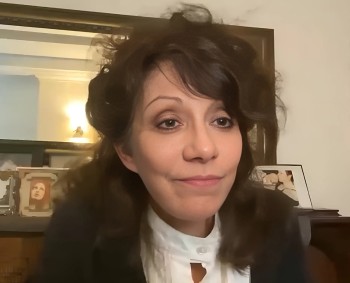 As if we'd pass up the chance to talk with Clueless writer and director Amy Heckerling! We're delighted to share this conversation about the making of her totally awesome adaptation of Emma. In this episode, Amy takes us behind the scenes to discuss how she reimagined Austen's novel for contemporary Beverly Hills—from the film’s characters and plot to its casting, costumes, distinctive visual style, memorable soundtrack, and now-iconic Clueless lexicon. She also reflects on her experience as a female filmmaker and the creative choices that helped make Clueless a modern classic.
This conversation was recorded during JASNA's members-only Clueless watch party, held in celebration of the film's 30th anniversary in July 2025.
Amy Heckerling is an acclaimed writer, director, and producer whose work spans film, television, and theater. In addition to writing and directing the Clueless, she also wrote and directed Look Who’s Talking, Look Who’s Talking Too, Loser, I Could Never Be Your Woman, and Vamps. Her directing credits include Fast Times at Ridgemont High, Johnny Dangerously, and National Lampoon’s European Vacation, and she produced A Night at the Roxbury. Amy’s television work has included executive producing, writing, and directing episodes for the series Clueless and Fast Times, and directing episodes of The Office, Gossip Girl, The Carrie Diaries, Red Oaks, Weird City, and Royalties. Amy also wrote the script for Clueless, The Musical, which opened at London’s Trafalgar Theatre in the West End in March 2025.
Show Notes and Links
 Listen to Austen Chat here, on your favorite podcast app (Apple Podcasts, Spotify, and other streaming platforms), or on our YouTube Channel.
Credits: From JASNA's Austen Chat podcast. Published July 2, 2026. © Jane Austen Society of North America. All rights reserved. Theme Music: Country Dance by Humans Win.
Transcript
This transcript has been lightly edited for clarity and readability.
[Theme music]
Breckyn: Hello, Janeites, and welcome to Austen Chat, a podcast brought to you by the Jane Austen Society of North America. I'm Breckyn Wood from the Georgia Region of JASNA. After hosting 35 episodes, I'm taking the summer off, but the podcast isn't. We have several special episodes and guest hosts lined up to keep the Austen conversation flowing, and I'll be back in the fall. In this episode, JASNA's Vice President for Regions and newsletter editor Susan Wampler chats with Clueless writer and director Amy Heckerling about the making of the totally classic, modern-day adaptation of Emma. The conversation was recorded last year during JASNA's members-only Clueless Watch Party held in honor of the film's 30th anniversary.
Amy Heckerling is an acclaimed writer, director, and producer whose work spans film, television, and theater. In addition to writing and directing Clueless, she also wrote and directed Look Who's Talking, Look Who's Talking Too, Loser, I Could Never Be Your Woman, and Vamps. Her directing credits include Fast Times at Ridgemont High, Johnny Dangerously, and National Lampoon's European Vacation, and she produced A Night at the Roxbury. Amy's television work has included executive producing, writing, and directing episodes for the series Clueless and Fast Times, and directing episodes of The Office, Gossip Girl, The Carrie Diaries, Red Oaks, Weird City, and Royalties.
Amy also wrote the script for Clueless: The Musical, which opened at London's Trafalgar Theatre in the West End in March 2025. I hope you love this episode!
Susan: Can we go back to like the very beginning of when you first came up with the idea for Clueless? I know it evolved through—you know, went through a few studios—started out as a television series idea, correct? You just kind of talk about that evolution to Paramount and when you finally headed to lift off.
Amy: It was a long and bumpy road because I had been working on other things and I had a successful movie, but that didn't seem to like get me the projects and the, you know, establishment that I wanted. I was still in the sort of girl ghetto. And I thought, well, what would I like to do? What would make me happy? Forget this movie industry. And I just thought of like, characters I really loved, which were always very optimistic people—because I don't understand how people could go around being optimistic. And two movies that—well, one movie and one book—Gentlemen Prefer Blondes with Lorelei. She was just so sure that all men were in love with her. And Ed Wood—he was writing really horrible movies and directing them, and he was just enjoying himself and feeling so artistically fulfilled and happy. And I thought, imagine somebody who you just can't burst their bubble. They just see what's wonderful and fun, and they're enjoying what they're doing, and they're sure that they're right. And when they look in the mirror, they think they look great. And, you know, what kind of person would that be?
And so I wrote a pilot for 20th Century Fox with this teenage girl. And they passed on it. And then I got a new agent because I thought, why is everything going wrong? You know? And I got this agent, Ken Stovitz at CAA, who is amazing. And he said, "Let me see everything you've been working on." And, you know, things I'd been writing. And he read the pilot and he said, "This is a movie. This isn't the TV show." And I was like, yeah, I'd love that. So I started to think, okay, what are the bones of an entire script—with a beginning, middle, and end—with this kind of character? Where have I seen that, where it worked? And then I remembered reading Emma in college. So I reread that, and I was like, "Boy, this Jane Austen is pretty timeless." And everything in it—I mean, my—the book I was using—is all underlines, because it's like, this could be here; this is like when they do this; this is how she would say that. And it just was—it was like she laid it all out. And it was like, you know, this like blessing from the past.
And so my agent said, "Let's go back to Fox, because they own the material that you wrote before, so maybe they'd be interested because they already, you know, have a foothold." And so I wound up writing a script for Fox. And I had a wonderful executive who was a big fan of Jane Austen. Her name is Elizabeth Gabler. And we just had a great time working on, you know, the script. And when I handed it in with—I also made a videotape of Alicia Silverstone from the Cryin' Aerosmith video—and I said, "I love this girl and here's the script." And they said "no." And the feeling was—at that time, a number of comedies came out with young people and implying they were stupid, and that was the joke. There was some—a movie called Airheads, and there was a movie called Politically Correct University—PCU. And it had—I thought they were funny. It was like Steve Buscemi and Adam Sandler and David Spade, and they were funny movies, but they didn't perform the way the studios wanted them to. So they said, "no more stupid young people." And that was like—you know, once the studio says that and the agents all hear it and the producers hear it, it's like, okay, nobody's interested in stupid young people.
And so to have a script with young people called Clueless, it's like, kind of like an automatic—you don't even have to read it, just, you know. So everybody in town passed—town being L.A.—and, you know, Ken Stovitz, my agent, just would not give up. He said, "This is too good. They don't get it. They're so stupid, blah, blah—and where are we gonna go?" And just so angry and determined. And he just kept plugging away and plugging away. And finally it got to Scott Rudin, the producer who did like, you know, every Oscar movie. So—and he liked it. And once he liked it, the studios started bidding against each other to have it. So that's how strong their opinions are.
Susan: Can you tell us a little bit about the casting process? You knew you had Alicia Silverstone in mind. And you've launched—I mean, some of the films that you've done—like you know, Sean Penn, that really ignited his career when he did Fast Times [at Ridgemont High]. And all of the Clueless actors have, you know, gone on to a lot of success. Paul Rudd—that was one of his first films. Just talk about, like, that process and who was hardest to cast? Which role? And I know you had to fight for Alicia Silverstone, I believe, a little bit.
Amy: It's weird because like, you know, casting with really young people is—it's like a river. Every time you stick your foot in it, it's different. And the young people that were around then were wonderful. So I was lucky. And I knew I wanted Alicia. And when I met her, I just loved her. She was just so endearing and so youthful and innocent and just guileless. It was just like, she could say these lines that, coming out of anybody else, you would think, oh, she's so conceited. But with her, it's just like childish and innocent. And then, you know, I wanted to find the perfect guy that we would, like, all love for her. And there was a pilot that didn't go—something like Red Oaks or something—and the young guy in it was Paul Rudd. So that was all I saw of him. But then he came in, and he read, and I loved him. But we still were very early in the casting, so they wanted me to see all these other people. And I ran into him in a coffee place, and he had cut his hair really short. And I was like, "What did you do? I want you in this movie.
I wanted you to be scruffy and college guy." And he goes, "I didn't hear from anyone." I was like—he immediately went to, "They don't like me." It was like he gave us no time at all. Like, we have to cast. But in any case, that all worked out great. And then for Dionne, I wanted somebody very regal. Somebody that would seem like she was a queen. And so you wouldn't expect this kind of behavior from somebody very young, and it wouldn't be that she's like stuck up. It's just like she's royalty. And Stacey Dash had that quality, you know? There's just something like very knowing and, you know, powerful about her. And Breckin, that was hard, because it was like he was very close friends with Seth Green and the two of them were so adorable. It was like, aye. But there was just something so scruffy and lovable about Breckin. You just—you see him and there's a vulnerability and the coolness. So you just, you know, feel like he's the perfect person for Brittany. And Brittany—she just came in and blew us away. There was just—she was just like a puppy, you know?
You just want to take care of her. And she seems so, like, open to the world but clueless about what it is. And you'd see why somebody would want to, like, adopt her and take care of her. So that worked out great. And, you know, they were all—I mean, I could go on and on about every person.
Susan: It's a terrific cast. I mean, it really is. Can you talk a little bit about the writing process? There's so many things in Emma that we see that you really brought to this and modernized in this. How did you decide on making Josh an ex-stepbrother versus, you know, a neighbor or something else? And then also Christian. Can you talk about those kinds of choices?
Amy: Well, I tried to take a—what is the essence of that person in the story? And one of the big, you know, tropes of, like, romantic comedies is you find out that the person that's been under your nose the whole time is the one you really love. Of course, there's a lot of doing things to prove that, but the fact that you don't count them as a possible love interest because they're there all the time. And you've seen that in a lot of romantic movies. And that was sort of in Jane Austen's. It's like, her sister and his brother were married. He was like family to her. They're not blood relatives, but they could fight with each other because it's like, he sees her doing something stupid and wrong, and he could get mad at her. Now, people behaved in a certain way in that level of society. They didn't go yelling at each other, but they can, because they're that close. And so I wanted that quality of somebody that you can fight with like they're your family, but they really aren't. And the fact that, you know, in Emma, his name is Knightley, And so he's a knight.
He's like a warrior. He goes out and fights for you. And Joshua in, you know, in all the books about names is, you know—the Battle of Jericho—he's a warrior. So they're both people that will go out and fight for you. Let's see, Christian and Frank Churchill. It's like she decides—and she's got waaay too much of imagination—she makes up whole scenarios in her head of what she thinks is happening, which is wrong. But she thinks, maybe I want one— boyfriend, you know. I—it's—let's—what is that all about? I mean, everybody's falling in love, and they seem to be really, you know—she likes to make it happen, but what about—what does that feel like for her? And so she decides to, like, let herself feel something. Now, that means she's got to pick out the perfect person, which has nothing to do with, like, interactions between two humans. It has to do with her making lists, and figuring it out, and finding the person that on paper is right. So in Emma, she realizes, "Oh, here would be a good guy for me. I'm never going to get married.
I have to take care of my father. But like, I could see being involved with somebody like—he's handsome. He's smart. He makes good jokes. We laugh a lot." On paper, he's perfect. But she has—it's not emotional, it's not real. And she doesn't even know that he's unavailable because she's imagined what he is more than learned. And so, Cher hasn't, like, thought about is he even interested in girls? Of course he must be. And especially me; he must be interested in me. She makes up things in her head without seeing what the world really is. And so she doesn't know he's unavailable. It just never would occur to her. And so how are the different ways to make somebody unavailable that you didn't know they were unavailable? In those days, if you want to get the inheritance from a person that's going to die soon, but they don't like who you like, maybe you should put that off for a while, but let her know you really love her. So it's a secret engagement. And other people are going, "what's going on with him?" And they could, like, see that there's relationship stuff, but they're not really together, but she's mad at him in a way that you wouldn't be to somebody [unintelligible word], you know?
So other people might figure it out. And certainly other people could figure out that Christian is gay. But because she's, you know, Cher or Emma, she doesn't figure it out.
Susan: And how about Mr. Woodhouse versus Mel Horowitz? Kind of like mirror images in a way.
Amy: Yeah, she feels like she's in charge of things, and she is in charge in a way. And to take care of somebody—that's a big responsibility for a young girl, and that makes her feel powerful. Because if she says, "The doctor said you could eat this but not that. And the doctor is sending over a guy to give you this shot. And, you know, I made your appointment, and you're gonna see your parents." And for a 15-year-old who's been doing that for a while, that's pretty, you know, impressive and powerful. And Emma is like, he can't go here because he'll be too cold. But if they've made arrangements for him to have a fire going that he could sit by, oh, he can go out to that place and socialize. And here are the friends that can come by. And he likes to see his doctor, who he could complain to all the time that he's friends with. You know—so Emma is a caregiver, which makes her feel like she's in charge of people, as is Cher.
Susan: Absolutely. You also talk about the lexicon you created for this. You went to—I think you observed or you sat in on some classes at Beverly Hills High School to observe and you were—uh, it just has such a unique lexicon and vernacular for these kids. And it's just—you still hear all these phrases today. I mean, they really took hold. Can you just talk about the process of creating their, their language and world?
Amy: Well, like any, you know, way of speaking, it usually comes out of a disenfranchised group. I mean, there's prison slang, there's Cockney slang, there's gay slang, there's, you know, whatever groups decide they need their own language so that other people, you know—"We're not talking for them. We're talking amongst ourselves, and we don't want them to know what's going on with us." And young people, of course. So, I mean, I was in Beverly Hills High School. It's not that, like, all the vocabulary came from there, but just from—you know, and also you're working with actors, and young people come in all the time and they're reading for you. And one guy came in—and this was after in California and other places in America, there had been a lot of shootings where post workers had gone a little crazy and shot people. And so he comes in, this actor, and he said, "Could I say "postal"? You know, it's like—because, like, for people that are like angry?" And I went, "Oh, that's great. Could I have that?" "Yeah." You know, and it was circulating around his group of friends, but he just told it to me.
And one day we were shooting a—this was later, a TV thing—and Stacey Dash says to me, "Can I call him my "boo"? Because that's what somebody said to me." And one day Donald Faison said, "I heard this kid saying he's "keeping it real." And I go, "yeah, let's do that." So, if you're around young people, they're going to tell you stuff. And now everything is texting. So, you know, when people say "IRL," "TMI," or whatever, you know, you go Google, what is that? And then, you know, then you're doing it, you know? And there's always been words that you like or words that you don't like. And I loved having Christian be somebody into old movies from like the '30s and have that like, you know, Dashiell Hammett kind of slang—you know, James Cagney movies, the slang of the '30s and '40s. And then Cab Calloway published the jive talk dictionary. I don't know what year that was—probably the '30s, probably. But there's been, like, a million dictionaries of slang. And now it's all online. And, of course, you could even talk to people and learn stuff if you want to do that.
But it's out there and it's fun, because whatever—if you say something is great, the way you say that says how old you are, how much money you have, where you live.
Susan: Another thing that was really distinctive—I mean, you also have so many literary references in this film, you know, between Shakespeare, Dickens—everybody gets named dropped. It's really amazing, you know. It's a very smart film, very funny. Every little detail is so, so perfect, I think. And I remember seeing Bill Pope, I think, talking about he's looking for photos—like, "I want it to be happy." Is that correct? Can you talk about that a little bit?
Amy: Yeah, I mean—okay. Bill Pope is a genius, and a lot of DPs are, but like, then there's also a lot that just will go with like the latest thing. Like, for a while everybody was using long lenses, which makes, you know, the background all blurry, and you just pick out the one thing that you're focused on. But it's a very claustrophobic feel because you've squished in everything. And, you know, then it's on the Levi's commercial and everybody likes it. So everybody's doing that, and then it makes it look like you're not in any particular place. You're just—you're you, and there's a smushy, out-of-focus world around you. And if you're stoned and you think you're the center of the world, that might be a good look, but it ain't a good look for everything. But it becomes a style. Then there was shaky cam, which was like—I think it started with, well, you know, The Office and all of that stuff with, like, "we're pretending it's a documentary." Now, if you're shooting a documentary, you get a cameraman who can hold the camera still. But everybody was shaking the cameras around to show that it was "real."
And, yeah, it's not on a tripod or a dolly. It's in somebody's hands. So, I hated that. That makes you physically sick. Then the other thing I really hate—I hate so much—is smoke. After Cabaret, which was beautiful—which was a smoky café in Berlin in the '30s—and Bob Fosse and Geoffrey Unsworth, the cameraman, made a beautiful looking film. But everybody thought, "Oh, smoke." So they just put smoke all over the place, and it's still happening more and more and more. And I can hardly watch a lot of things because I feel like I can't breathe, you know? So I wanted something that was like a world that's happier than just DPs following the, you know, the herd. And Bill Pope is a brilliant person because he goes for what works for the film, not for what everybody else is doing. And he does it, you know, so that it's just beautiful. And so, I felt like I could talk to him and tell him what my problems were—because they're deep. [Laughs] I grew up in the Bronx. There's windows along one side of the building, so light only comes from one place.
And my father—you know, we didn't have a lot of money. Anytime I put a light on, he'd say, "We don't have a—you know, stock in Con Edison. Like, I don't want to pay a big bill for lighting, you know. So shut the lights off till there's practically no light at all. And then you could put a light on, but not all the lights, just where you are, and shut it off right away." Now I'm for being environmental and not wasting energy, but I was just really bummed. So when I explained that to Bill Pope, you know—and you could show a beautiful Vermeer with light coming in from one window and certainly nobody put on electric lights—but if that was how all the lighting was, I would be really bummed. So we both brought in tons of photos, and he printed out a lot of stuff from different movies. And I'd say, "this makes me feel like this, that makes me feel like this." And he says, "but doesn't this make you feel like that?" And I was like, "Well, yeah, as long as it's bright enough," you know. And, you know, a lot of DPs, when they hear "bright," they think, oh, you want to do it like television.
Television is bright, and that sucks. And I don't want it to be flat and like television; I want it to be attractive. I want it to be someplace you might laugh at a joke and you might like to live there. So, we worked it all out. And even though I'd say to him, "Ugh, I hate being in the sun—which of course I do—but he would yank me over to some backlit leaves on a tree and say, "Come on, isn't that beautiful?" I'd go, "You're right." You know? And it's, like, okay—so as long as we have that as the background, and it's not, like, everybody in this harsh sun, but it's, like, pretty, and sparkly, and not garishly colored, but has a beautiful palette. So, that was a fun way to work and so satisfying to see something look finally like I wanted a film to look like.
Susan: And that leads to the costuming. Mona May's designs were very colorful and very—everybody had a very distinctive look, I think?
Amy: It was not the first thing I did with Mona. And we—it's like, I don't know—I used to play with cutout dolls when I was little, and we'd have the little paper dresses. And it was like having another friend that you could do that with, you know? And we'd have, like, the cut-up pieces of outfits—like, this with that and that with this. And there'd be a whole board of, like, you know, what they would wear when, and what the other people were wearing, and all of that. And I wanted this palette going through the film so that it was fall and there was, like, you know, the leaves and the autumn colors. And there was a consistency. I mean, I couldn't control it completely because you can't tell an extra not to wear something. I mean, you can, but you can't dress every single one of them. And as soon as you turn your back, they're putting on the brightest color there is so that their parents could see them in a movie. But we worked on that. And then Christmas time at the Val party—that could be a little more garish and, like, you know, green and red and bright, you know, Christmas lights.
And then when it's spring and Christian arrives and it's a new beginning, it's a new birth and it's like pastels and Easter eggs. So those colors go throughout. And, you know, we wanted to make the people look good in their outfits, but also like Elisa was so fun to dress because she's the fashion victim. So, she's somebody that thinks that she has these ideas of, like, you know, she's in a combat outfit, but it's, like, over-the-knee leggings that are camouflage. Or, you know, she's a sailor one day. And she's like somebody that's, like, a little psychotic about what she is and what she could dress like. And Stacey, of course, is elegant. She always looks like she could be giving orders to all the knights, you know? And Alicia—her father is a litigator. And that's the most important, wonderful job a person can have, so she's wearing a three-piece suit. And, you know—so we had a lot of fun with all of that stuff. And it was just a blast to work on. And she could go on for hours and hours about how she found the yellow suit as opposed to a different colored suit, as opposed to—you know, I mean—but it's all true.
You know, there would be days where we'd say, "That looks good. Okay, she'll wear that." And then she'll come to me the next day and she'll go, "I couldn't sleep. It's, like, not good enough." You know? You go, "I mean, you know, I'd do that over. Like, that line's not working." I get her.
Susan: You were all perfectionists. All perfectionists, and it shows. And about the music—the soundtrack is, like, really—you know, went platinum. I mean, it was, like, a huge deal, and it's just—like, anytime I hear any of those songs, I think about Clueless. How did you put that together? I mean, what's the process? Were you involved in making those choices? Obviously, as director, you oversaw everything, but—
Amy: Well, I mean, that's, you know, another thing that defines who the people are. Let's see. Well, the Radiohead song was, you know—I mean, it's smart college stuff, and it's depressing, and I'm a creep—you know? And, you know, smart and self-loathing. So she comes in and it's like, "Eh, this is a downer. What's with college kids and crybaby music?" And he's like, "You know, this is a really great, cool song." He didn't say that, but that's how I feel. But so, you could see that they're in different places. And "Kids in America" was a song I had liked since Fast Times, because I wanted The Go-Go's to start off Fast Times, and they said, "You can't have them," you know. "You have to use all these songs by the producer who has all these groups, and I don't like that song." And I didn't like the ones that they were offering me. And so I thought I'd go to this record store—because I'm a million years old—and they had this group, you know, Kim Wilde. And I—you know, it was like underground artists—people that you didn't know. And I heard this song, "Kids in America," and I brought it in, and I said, "I like this song and this album."
And they were like, "No, you can't use that." And I went, "Okay, I'll use it somewhere else. I'll wait a number of years and then I'll use it." So we did that. We got The Muffs, who were adorable, and they did a good version of it. But that said what I wanted to say: here we are, we're us, we're happy, and this is great. It's an insane point of view, but yeah.
Susan: What has surprised you most about the longevity of Clueless? I mean, it really just continues to grow in popularity.
Amy: I don't get it. [Laughs] You know? I mean, I'm amazed and I'm grateful, but you know, I don't know how to process it.
Susan: We talked at the very beginning of this chat about the musical and when—you know, in London, I saw it in March, and we were in line and there were a ton of tweens in plaid outfits, and they were so excited. And, obviously, they were not alive in 1995, but they were—could not be more thrilled to be there. I mean—so it definitely keeps drawing in new generations. I mean, I know you must be really proud of it, but is there anything, you know, that you—any reason you feel that why this has caught hold?
Amy: I'm not the person to ask. I just work here.
Susan: Well, what did you enjoy most about making the film? Was there one thing that really stood out?
Amy: Well, I just, that was the most fun I've ever had working on a film. Everybody was like so into it. And everybody was like—they were like at their peak of, you know, doing their art. They were just—and they brought it. They just brought it, you know? The actors were all wonderful. And the crew was, like, really gung-ho. And everybody was, like—sort of got the idea and what we were all—we were all, like, going towards the same thing. So that was—and then, like, sometimes I'd be like walking around, and I'd see where our set was, and I'd see just my colors and my people, and I thought, "Oh, I want to be there."
Liz: Amy, someone has asked, would you ever consider updating another Jane Austen novel?
Amy: Um, well, I mean, I think that Sense and Sensibility was done so brilliantly by Emma Thomas [Thompson], so I don't know if anything needs to be messed with from that. And then Bridget Jones was Pride and Prejudice, so—I don't know. I mean, it's been done. Well, Sense and Sensibility was a period piece, but I don't—I mean, as much as I love reading her, I don't know what else I would do.
Susan: Do you have another favorite Austen besides Emma? Is there anything—if none of these other films had existed, like Bridget Jones's Diary, what would you—do you have a dream project if you could go back in time?
Amy: If I could go back in time? I don't know. I mean, that one just hit me. But I think, on the whole, my tastes are, like, quirkier and darker.
Susan: One of the questions is: was it challenging in the 1990s to have Christian be gay? Was that a problem and how was that received?
Amy: You know, maybe people had issues with it, but in my brain, I didn't—it didn't make any sense to me for it to be an issue.
Susan: It's a perfect reason for him to—I mean, he stands out from the other—the way he dresses, he just—he's very different. It's just a great way of making Frank Churchill modern. It seemed to work out perfectly.
Amy: And there was a sort of resurgence of, like, swing dancing, and, you know, that people were kind of into that era. And I—you know, I would see young guys dressed in like, you know—not zoot suits—but in like period, you know, '30s, '40s suits. And you think like, "Oh, they look good," you know? And, I mean, it was just like a little blip on the radar, but, like—but it happened. And so you could see that somebody that would, like, not be so comfortable in his time would see something that looks interesting and get into it.
Susan: Absolutely. Someone else is asking why the film wasn't really advertised as being, you know, an update of Emma. Do you recall those decisions?
Amy: There was not a lot of "Oh, we must go see the new Jane Austen movie" feeling. I mean, there were, like, series of Pride and Prejudice and all of that and things on PBS, and—but I think those all came later.
Susan: Someone else wants to know about, you know, "such a Betty,"—the Betty, Barney, like the phrases—that's a reference to the Flintstones, correct?
Amy: Yeah. There was—also UCLA used to publish a slang report—the linguistics class—and I think that was in there. But the idea that, like, Betty was very pretty, and a Barney—nobody could figure out how he got her. [Laughing]
Susan: We talked earlier about the casting, and I remember hearing Paul Rudd talking about coming in and auditioning for pretty much every role, including Murray. Can you talk about that? Because he had a different idea of what that character was.
Amy: I don't remember him reading for Murray, but, you know, I knew that when he came in that he was great. And so, you don't know if you're going to find another person that would be good for Josh—that, like, you wouldn't want to waste all this talent. Like, maybe he'd want to be Elton or somebody. I felt like he's the kind of actor that can do a lot of things. So I just wanted to see what else to have in the bag to pull out when we shuffled them all around.
Susan: I also saw—I know you had Alicia Silverstone in mind early on— but that Reese Witherspoon was looked at and even, um, and Sarah Michelle Gellar for Amber? Is that, is that true?
Amy: No, I never—I did not know that.
Susan: But I think I saw that they were considered, like—they were just a long list of names. It's like any casting, it's, like, oh, you know, you get people pushed your way whether, you know, you have different ideas—but no?
Amy: I don't—I mean, I remember I met Reese Witherspoon, but she wasn't, like, coming in and reading or any of that. It was like— you know, the agents get a lot of young people and they, like, have them go out and meet everybody that's doing anything. But it's not like the casting person said, "Here's Reese, and now she's going to read this." I mean—Sarah Michelle Gellar, yes, she did read for Elisa. And I thought she was great. But then she was working on something else, and the schedules wouldn't work together.
Susan: How early, how young were you when you decided you want to be a director? I know you went to NYU Film School and then you went to American Film Institute. So you knew pretty early on that you wanted to be a director and writer. What was the first spark for you?
Amy: Well, I was always drawing, and I was always watching movies. And I went to Art and Design High School. So, I was not—I couldn't stand my neighborhood, and the people there, and bullies, and all of that. And I said, "I gotta get outta here." And so, I applied and I made it, and I was very happy to be in an art school instead of a normal high school. And there was a boy that sat next to me, and we were reading Great Expectations. And no matter what we were reading in the class, he was like, "That's not how it was in the movie." And he would act out the whole movie on me. And the teacher was like, "Not now, not now." And then at the end, sometimes she said, "Okay, how'd they do it in the movie?" And we had to write down what we wanted to do when we grew up as a composition. And I wanted to be a writer/artist for Mad Magazine, because I thought it was funny and I liked it. And then he said he was going to go to Hollywood and be a movie director. And I was like, wait a minute.
Movies are like this special, amazing thing that only, like, rich people and smart people that live in the Hollywood place get to do. And here he is—the guy that copies from me on every test—He had the nerve to say he wanted to do it? I mean, I didn't think you could say you wanted to do it. It was too amazingly wonderful for a regular person. And then I said, "Screw it. I want to do it. I know I want— I've always wanted to do it. I didn't think it was a real thing that people were allowed to do." So then I was, like, looking into film schools and, you know, had 3 jobs to earn enough money to go to NYU Film School, and you know. . .
Susan: We have a few more questions in the chat. The reaction shots in the movie are very effective. Did you have a special approach to that?
Amy: It was—I wanted it to be scary and yet silly because—I mean, you could die on the freeway if you don't know what you're doing. And I was—you know, when I first learned to drive, I was hit by a drunk driver. So, I don't take that stuff lightly. But also the fact that I don't drive on freeways because I'm afraid of getting hit by a fast car because of that incident. And the idea that, like, sometimes you're on a road and, you know, it doesn't say, but you're, like, you're on the road that's only going to land on the freeway. And whenever that would happen to me, I would get on the freeway and just scream until the exit. And, then I would just be so grateful that I was still alive. And so I thought, that makes sense for them.
Susan: Yeah, I've driven on the freeway by accident in LA. I moved there in 1994. You know, I can't watch that scene without just reliving that moment. So, no. A few more questions. One is about the Emma and Miss Bates relationship and how, in the film, it's really Cher being insensitive to Lucy about her being from El Salvador. But that's a pretty small part of the film, and the question is about the—making that choice. Is it because you didn't think Cher should be so heartless? As the way Cher [Emma] treats Miss Bates in the Box Hill scene, or what—tell us a little bit more about that choice.
Amy: That's funny, because in the show that's on the West End, I got so much pressure to make that a bigger moment, and make her be more horrible, and make Josh see her being horrible, and have her feeling really bad. And I didn't want her to be that horrible. I just wanted her to be like, like she doesn't get it. Like, "I don't speak Mexican." She doesn't even realize that that's not a language. So it's silly of her to, you know—and for realizing that she hurt somebody, but she didn't know any better. She didn't mean to. I mean, I didn't want her to be a rotten person, but they all were very insistent, so I have her being madder at the housekeeper in the show. And it still grates on me, because I feel like—but they said you can't say, "Oh, she's not a Mexican. It's like—now it's, like, politically incorrect for her to be mad that she's thought she—you know, someone thought she was Mexican." So I go, "Okay, I want to be sensitive to that. But how do I do that and show that she didn't mean any harm, but, like, she doesn't want to, like, get distracted right before the act—you know, the driving test?"
And so, I kind of lost that battle because everybody agreed that like, "No, she's got to be really bad." Ugh! And I still am not sure about that. But, yeah, she did do something that could be thought of as thoughtless. And, you know, "Why didn't you do this when I told you to do it?" You know? So she is kind of being, like, heartless for a moment. But, you know, the relationship they have is like they'll be best pals in 2 minutes. Like, she knows that Cher doesn't mean any harm. She knows she's just like a little kid who does things meaningless and doesn't mean to be mean. So, that was that. I tried to make it so that it would work. In Emma, of course, she's going along with Frank Churchill and his behavior of, like, it's cool to be insulting—I mean, that's certainly still a thing, the people that think of the nasty comments that are so bitchy—and that she thinks, "Oh, is that the way to show that you're clever? I'll go along with it." Because, you know, when you meet a guy, and you're trying to impress him, and you're seeing what his gang does, you think that's the way to behave.
She knows in her heart it's not right, and she'll stop that stuff soon. But for that moment, she tried it on, and Knightley saw it and reminded her that he thinks that she's better than that. Cut that out. And she knows he's right.
Susan: We also have a question about the budget for the movie. I think it was, what, $12 or $13 million? Is that right?
Amy: Yeah, what was it? It was less than 15 [million], but it, you know, it was like low-middle.
Susan: It's a very tight budget for the costumes and for how—just how beautiful it all looks.
Amy: I mean, there weren't big action scenes. The big action is being on the freeway. [Laughing]
Susan: Yeah.
Amy: You know, so that's—you know, in that respect, it's in her house, it's in school, it's in a mall.
Susan: Another question is, was Dionne's character based on anybody in the book?
Amy: No. No, that one—just like she needed a friend.
Susan: And how did your feminism play into the film at all? And I remember hearing you talk earlier, I think, about that—there was some pressure to not have it be all, you know, with 3 female leads—to have more, a more male-centric story.
Amy: That's been the story of my life. You know, it was like—at Fox, it was like, "Here are the notes." You know, "Why are we, like, just only with this girl? And, you know, the guys should be bigger characters, and maybe Josh lives next door so that they could always be around, and then she realizes she loves him. And then how is she going to get him? And he's right next door. And maybe, maybe his mother likes her father, and maybe she can matchmake them." And I was like, "Oh, give me a break. I just don't want to do that. And also, the story is from her point of view, and we're in her head. And then what? We're going to see scenes with the boy next door? How'd he get in her head? I mean, that tears it apart."
Susan: Another question is, is it any easier being a female director 30 years later?
Amy: Well, I've been doing this theater stuff for a long time. And then there was like—you know, people will say, oh, everything is woke now, but it's, like, it's not really. But also it has to have the appearance of—so, if there's a great guy that is brilliantly talented that you want to be doing something, it's like, no, because he's not female or this or that or the other. So we can't use him. And you're like, but why can't we just use everybody that's good, and use women that are good, use different ethnicities that are good, certain sexual proclivities that are good? Yeah, and just like—there's good all over the place, and let's give everybody a chance.
Anyway. What do I know? All I know is, like, for a million years, it was, like, you can't have a movie where the main character's, like, a female. It's like, they could be part of a rom-com. But I've also been in pitch things where it's like, you know, the main character can't be Black; he could be the best friend. So, I've been hearing a lot of dumb shit my whole life.
Susan: Well, that feels like a perfect place to thank you for being so generous with your time today. And it's just absolutely terrific. It's just been a joy. So, thank you so much. I'm so grateful for your time, Amy.
Amy: Well, I appreciate you guys. It was very nice of you to have me, and I appreciate Jane Austen. So, props to her.
Breckyn: Dearest listeners, I am pleased to announce that Austen Chat now has over 200 five-star reviews on Apple Podcasts. Thank you so much for your support. If you haven't yet given us a rating, please consider leaving a 5-star review on Apple Podcasts so more Janeites can find us and join our Austen-loving community. Again, thank you. I remain yours respectfully, Breckyn Wood.
[Theme music]
