The 2022 Netflix adaptation of Jane Austen’s Persuasion, written by Ron Bass and Alice Victoria Winslow and directed by Carrie Cracknell, was generally panned upon release. Wendy Ide of The Guardian, for one, pronounced the film “a travesty,” and Teo Bugbee of The New York Times called it “curiously excruciating.” Most critics especially deplored the film’s attempt to modernize the language of the novel to the extent that the script bears scant resemblance to the original but instead presents us with “a jumble of intentionally anachronistic dialogue” (Adams). One of the few positive reviewers admitted that she has never read the book (Cunliffe). Indeed, it may be impossible to enjoy this film if the viewer keeps Austen’s original text in mind. It is not an adaptation along the lines of Roger Michell’s 1995 Sony Pictures Classics release of Persuasion (screenplay by Nick Dear) or Simon Langton’s supremely faithful BBC 1995 Pride and Prejudice (screenplay by Andrew Davies). If one approaches it as a loose adaptation, however, or even in some respects an appropriation of the novel, some redeeming features can be identified. Besides its visual appeal, the film ultimately captures the anxious and wistful tone of the novel and may speak to us today, as we collectively experience especially troubled times.
Teo Bugbee acknowledges the film’s visual allure: “For this story of rekindled romance, the film summons the handsome appointments expected for a big-budget period drama. There are extravagant mansions, brocaded costumes and magnificent vistas.” She then, however, identifies the central problem with this adaptation: “But there is a crisis of contemporaneity at the heart of this pretty adaptation, and the trouble begins with its presentation of its heroine.” Persuasion is a novel predicated on loss, beginning with the Elliot family’s need to leave their ancestral home, and filled with a cast of widows, widowers, and individuals fixated on aging, illness, injury, and the loss of loved ones. Anne Elliot is an isolated and anxious heroine, underappreciated by her family and single, nearly eight years after having turned away the man she loved. While Cracknell’s film generally follows the novel’s plot, excising only the character of Mrs. Smith—Anne’s widowed friend who is destitute and ill—its depiction of the character of Anne is generally not reflective of the heroine described in the novel. Esther Moon points out that Anne’s decision to break her engagement to Frederick Wentworth “rested on [her mentor] Lady Russell’s social values of prudence, propriety, and predictable success, which became Anne’s temporary guiding lights. Anne defined herself by these values when she broke her engagement because it was ‘indiscreet, improper, hardly capable of success, and not deserving it.’” The heroine of this 2022 adaptation, however, does not display anything near this sense of propriety.
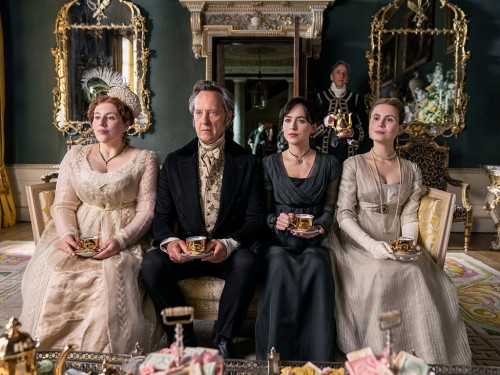
Whereas Austen’s Anne Elliot is circumspect and restrained, the Anne of Cracknell’s film tries to channel the contemporary brand of antiheroine who acts out and wears her heart on her sleeve. Throughout the film, Anne (Dakota Johnson) breaks the fourth wall in a manner imitative of Phoebe Waller-Bridge in the 2016–2019 British comedy series Fleabag. As with the ever-awkward Waller-Bridge and with Bridget Jones (another famously updated and awkward Austen-inspired antiheroine), “There’s lots of drinking red wine straight from the bottle, crying in the tub and lying around in bed, narrating her romantic woes with a familiar, self-effacing wit” (Lemire). Johnson’s Anne displays none of the refinement and reserve of the novel’s heroine as she clowns around, making a mustache of jam for herself while impersonating Wentworth for her nephews. While at dinner at Uppercross, she uncharacteristically blurts out to everyone at the table that her brother-in-law, Charles, originally wanted to marry her and not her sister Mary. Perhaps worst of all is the scene in which the Elliots sit awkwardly at tea with Lady Dalrymple and her daughter, and Anne breaks the silence by slurping her tea and relating a dream about an encounter with an octopus, a disclosure supposed to offer some kind of modern psychological insight into her self-sabotaging ways.
© 2022 Netflix.
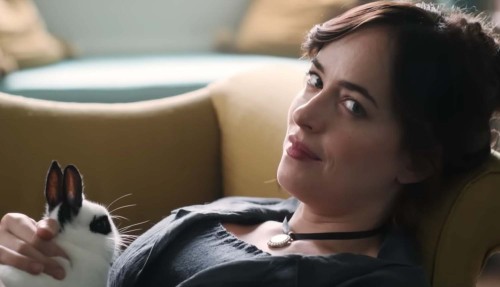
Bridget Jones’s Diary and Fleabag are not the only shows from which Cracknell’s film takes inspiration in its unsuccessful attempt to be trendy. Like its Netflix predecessor and Austen appropriation Bridgerton, Cracknell’s Persuasion employs non-traditional casting. It also tries in places to sound like the campy series. Constance Grady, who calls the film “a disaster,” complains, “It apes Bridgerton’s cheeky anachronisms (“A 5 in London is a 10 in Bath!”) as if its audience should consider them revelations rather than weak jokes that by now are more than tired.” Stylish quips aside, the screenplay is generally (excepting the octopus) a modernized and oversimplified expression of the main ideas of the novel. Subtext is often brought blatantly to the surface as when, in the film’s opening, Anne sarcastically claims to the audience that she is “thriving,” while she is repeatedly—and more overtly than in the novel—denigrated by her father and sister. In the film, when Elizabeth (Yolanda Kettle) and their father, Sir Walter (Richard E. Grant), peruse their family history and the notes that Sir Walter has added in the margins, Elizabeth tells her sister, “Shame there wasn’t anything nice we could think to add about you, Anne.” To this, an isolated Anne, who calls herself the “crack in [her father’s] looking glass,” simply stands by, cuddling what may be seen as her “emotional support” bunny rabbit and speaks to the camera. Later Johnson’s Anne uncharacteristically expresses her regrets and frustrations—unabashedly telling Lady Russell that she’s not over Wentworth and that “Frederick Wentworth was the only person, save you and my mother, who ever really saw me. And understood me. And loved me.”
© 2022 Netflix.
Anne is not the only character who is notably modernized in the film: the Lady Russell of Cracknell’s film is also quite different from her novelistic counterpart. When Anne confides in Lady Russell (Nikki Amuka-Bird), she is met with an emotionally sympathetic ally. Although she warns that “the truth is, marriage is transactional for women. Our basic security is on the line,” this Lady Russell is softer than the original. She acknowledges, “I thought I was protecting you. I was wrong. I see that now. And I’m sorry.” As John Wiltshire notes, in the novel “[t]here is no hint that Lady Russell has felt guilt about the persuasion exerted over Anne in the past—indeed ‘her heart revelled in angry pleasure, in pleased contempt’ when it appears that her original prejudice is being confirmed—for all the sadness of its consequences” (78). Not only is Amuka-Bird more sympathetic than her literary counterpart, but she also portrays a modern and independent woman of our own time—telling Anne that, although she’s a widow, she enjoys her own company and suggestively implying that she may not always be romantically alone, as she takes frequent trips to the Continent.
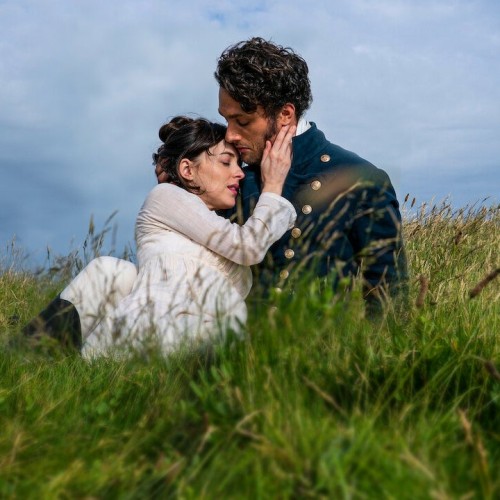
While the Anne and Lady Russell of the 2022 film are in many ways different people from the characters we find in Austen’s novel, there are ways in which the film does capture the sorrowful essence of the book. Cracknell’s film begins with a reminiscence of a time when Anne and Wentworth (Cosmo Jarvis) were romantically involved, reclining, embracing, and kissing in a grassy landscape overlooking the sea. The tear which falls down Wentworth’s cheek as Anne narrates, “but he was a sailor without rank or fortune and I was persuaded to give him up,” indicates that the couple has already been thwarted and sets the stage for Anne’s ensuing lack of fulfillment. The song “Quietly Yours,” wistfully crooned by the artist Birdy, begins and ends the film:
There was a time when I let you go
Allowed myself to be swayed and pulled
But for all my days I make a vow
No words could ever shake me now
. . .
Quietly keeping
This hope in my heart
Prayed the night bring
Back what I lost
Many years have gone by
But I never forgot.
This tune was created specifically for the film, and its lyrics about succumbing to outside influence and holding on to hope for the future are completely apt to the concerns of the book and the film.
© 2022 Netflix.
As for dialogue, there are some (though not many) beautiful moments of vulnerability and connection conveyed in Bass and Winslow’s screenplay that are based in Austen’s text, as when Anne discusses poetry with Captain Benwick. In the novel, when she senses his deeply emotional nature and his tendency to become agitated while discussing poetry, Anne “ventured to hope he did not always read only poetry; and to say, that she thought it was the misfortune of poetry, to be seldom safely enjoyed by those who enjoyed it completely; and that the strong feelings which alone could estimate it truly, were the very feelings which ought to taste it but sparingly” (100–01). Benwick, who “looked so entirely as if he meant to be understood” (100), is grateful for her interest in him, and Anne notes the irony that she, who is also consumed by the loss of a great love, has come to Lyme “to preach patience and resignation to a young man whom she had never seen before” (101). In the film, this exchange is present, although pared down, as Anne observes that Benwick is reading Byron. Here the words of the novel are paraphrased, as Anne says:
“I often think it is the great misfortune of poetry that it’s seldom enjoyed safely by those capable of enjoying it completely. Only people who know loss can really appreciate Byron. But those people should only taste him sparingly. Otherwise, they’ll be left more deeply in their sorrow.”
She then encourages Benwick, telling him that he is young and does not know what the future holds, and assuring him that he will be happy again in the future.
The film’s ending is also closely aligned with the novel. In the novel, while Wentworth’s epistolary confession of his undying love for Anne is famously satisfying, leading the couple to “all the immortality which the happiest recollections of their own future lives could bestow” (240), Austen does not let her readers rest easily in a vision of their happily-ever-after. It is important to note that Wentworth writes his letter to Anne in reaction to the debate he overhears between Anne and Captain Harville about which gender suffers more for love and which loves the longer. Within this discussion, Harville cites the anxieties of a married sailor:
“if I could but make you comprehend what a man suffers when he takes a last look at his wife and children, and watches the boat that he has sent them off in, as long as it is in sight, and then turns away and says, ‘God knows whether we ever meet again!’” (235)
With this idea reverberating, the novel closes with a description of Anne’s mixed feelings of elation and the worrisome “dread” that will come from having a husband who may be sent to battle:
Anne was tenderness itself, and she had the full worth of it in Captain Wentworth’s affection. His profession was all that could ever make her friends wish that tenderness less; the dread of a future war all that could dim her sunshine. She gloried in being a sailor’s wife, but she must pay the tax of quick alarm for belonging to that profession which is, if possible, more distinguished in its domestic virtues than in its national importance. (252)
The film portrays a happy and devoted Mrs. Croft, who boasts that she always travels with her admiral husband and has crossed the Atlantic four times, having visited the East Indies, Cork, Lisbon, and Gibraltar. While she claims: “The happiest moments of my life have been spent aboard a ship,” the film does not ignore the possible pitfalls of a naval marriage. At the Harvilles’ home in Lyme, Wentworth confesses to the group that he’d like to have a family someday, although “the wife of a sailor pays a tax for her husband’s chosen path.” While Mrs. Harville counters with “’Tis but a small fee,” Wentworth replies, “Constant worry. I’d hate to ask that of anyone.” Afterwards, however, the screenplay veers again into anachronism, as both Louisa and Anne stand up for the strength of womankind in a decidedly twenty-first-century fashion. Anne adds, “Your future wife will be perfectly capable of managing her own feelings. Don’t patronize her by deciding for her what worries she can and cannot endure. Who knows? Perhaps she’ll even be forging her own adventures at home.”
Cracknell’s Persuasion was released as the world was emerging from COVID-19 and the illness, isolation, and loss of life that the pandemic entailed. Then, and now, worldwide anxieties are high, as so many are adversely affected by—or at least constantly reminded of—wars, climate disruption, domestic gun and other violence, severe political and ideological divisions, the spread of disinformation, and the rise of artificial intelligence and the uncertainty of what it will mean for the future of humankind. Both the novel and the film capture some of today’s zeitgeist.
In 2020, at the height of the pandemic, Misty Kreuger considered the historical appeal of Jane Austen’s fiction for readers in search of comfort—from World War I veterans to a convalescent Winston Churchill, to isolated individuals at the time of composition. She writes, “Austen’s characters and plots have similarities to our lives that allow us to contemplate our current situations, yet their differences afford us the distance to enjoy escaping from our own world for the amount of time it takes to read a book or watch a film.” Persuasion, in the vein of her other novels, enables Austen readers to escape to a simpler time of holidays by the sea, musical recitals, and the composing of long passionate letters by hand. While this story also provides us with a satisfying romantic union at its end, however, Persuasion is perhaps the Austen novel that illustrates the most suffering before yielding its positive outcome—a happy ending that is also qualified. For these reasons, this final full novel may perhaps best resonate with readers today in this time of crisis and generalized anxiety. Although Cracknell’s film may seem to minimize the suffering the novel depicts, in its attempt to engage and entertain a contemporary audience, it captures at times the beauty and gravitas of the original.
